
The best time of year for a cooking holiday in Italy
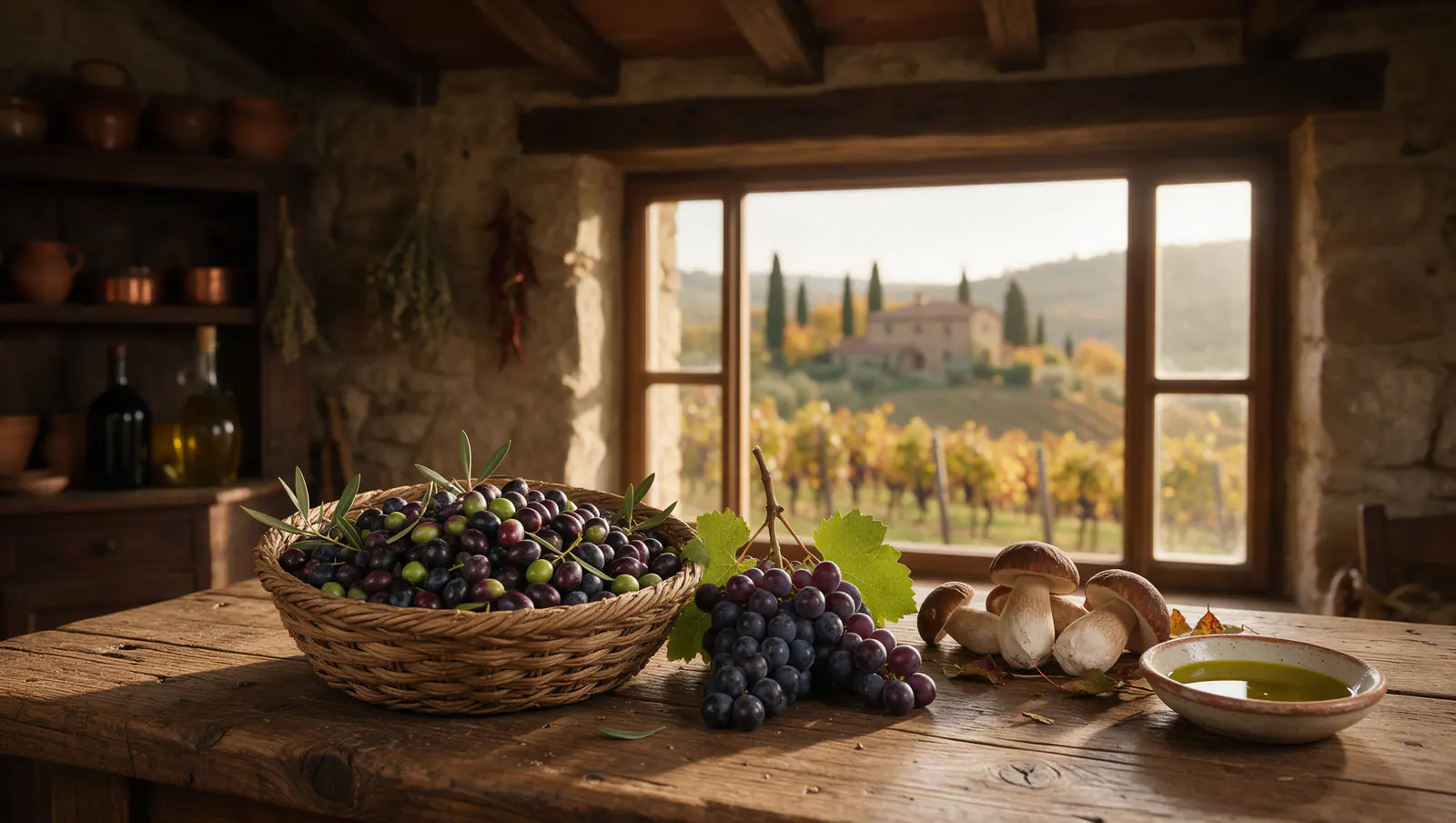
For most people, the best time for a cooking holiday in Italy is late spring (roughly late April to early June) or early autumn (roughly September to October). The weather is comfortable for market visits and outdoor meals, crowds are lighter than in midsummer, and the produce is at its most varied. Autumn has the edge if you care about wine, olive oil, mushrooms and truffles. Spring has the edge for fresh vegetables and long, light evenings.
Summer works if you can handle heat and plan around August, when many Italians go on holiday. Winter is quieter and can be rewarding for food lovers, but some countryside cooking holidays close for the season, so you will have fewer options to choose from.
Below we go season by season, with what you can expect to cook and what to watch out for. All dates are approximate: harvests shift with the weather each year, and the south runs earlier and warmer than the north.
Spring: green vegetables and gentle weather
From about March to May, Italian markets fill with the first tender vegetables of the year. Artichokes are a spring highlight in Rome and across central Italy, typically from late winter into April. Fava beans, peas, asparagus, wild greens and young garlic follow. Lamb is traditional around Easter in many regions, and you will see fresh, soft cheeses such as ricotta at their best.
The weather is generally mild, though early spring can be rainy and cool in the north and in the hills. By May, it is usually warm enough to eat outside in most of the country. Easter week is busy in Rome and Florence, and accommodation fills up, so book early if your dates fall around it.
Spring suits:
- Travelers who want fresh pasta with seasonal vegetables rather than heavy, slow-cooked dishes.
- Combining a cooking holiday with city sightseeing before the summer heat.
- Garden-focused classes at farmhouses, where you can pick herbs and vegetables yourself.
Summer: tomatoes, coastlines and the August question
June to August brings the produce many people picture when they think of Italian food: ripe tomatoes, zucchini and their flowers, eggplant, peppers, stone fruit, figs toward the end of the season. It is the natural time for a cooking holiday on the coast, where seafood, lemons and simple tomato sauces take center stage.
The trade-offs are heat and crowds. Inland Tuscany, Umbria, Rome and much of the south can be very hot in July and August, and standing over a stove in a country kitchen in the afternoon is harder work than it sounds. Many good programs adjust by cooking in the morning or evening.
August needs particular care. Ferragosto, the national holiday on August 15, sits in the middle of the period when many Italians take their own holidays. In cities, some family-run shops and restaurants close for a week or two around it, while beach areas are at their busiest. Cooking schools that cater to visitors generally stay open, but confirm before you book anything that depends on local markets or small producers.
Autumn: harvests, truffles and new olive oil
September through November is, for many food lovers, the most rewarding time of the year. Several harvests overlap:
- Grapes. The vendemmia usually runs from roughly late August to October, depending on the region and the grape. Wineries are busy and the countryside smells of fermenting must.
- Mushrooms. Porcini appear in the woods after late-summer and autumn rain, especially in the Apennine hills.
- Truffles. White truffle season is generally from around October to December, most famously in Piedmont, with parts of Tuscany, Umbria and the Marche also known for truffles.
- Chestnuts. Mountain areas celebrate chestnuts in October and November with festivals and chestnut flour dishes.
- Olives. The olive harvest typically starts around October and runs into November or December. Freshly pressed olio nuovo is bright green and peppery, and tasting it on toasted bread is one of the simple pleasures of the season.
September still feels like summer in much of Italy, and October is usually pleasant, with cooler evenings. November is wetter and the days are shorter, but the food is excellent. If you want to build a trip around these harvests, our guides to truffle hunting and cooking classes in Tuscany, olive oil tours in Tuscany and wine tours in Tuscany list the experiences worth considering.
Winter: slow cooking, citrus and holiday baking
December to February is the quietest season for visitors, and it has its own appeal. This is the time of braises, bean soups, polenta, ragù that simmers for hours, and pork-based traditions in the countryside. In the south, citrus is at its peak: Sicilian blood oranges are typically in season from about December into spring. December brings Christmas baking, from panettone in the north to regional fried sweets in the south.
The downside is availability. A number of rural cooking holidays, especially those run from agriturismi and country villas, close between roughly November and March. City-based schools and day classes usually keep running all year. Days are short, and the hills can be cold and damp, so winter tends to suit a city stay with day classes more than a week in the countryside.
How region changes the calendar
Italy is long, and the climate changes a lot from the Alps to Sicily. A few general rules help:
| Area | Most comfortable months (roughly) | Notes |
|---|---|---|
| North (Piedmont, Lombardy, Veneto, Emilia-Romagna) | May to June, September to October | Foggy, cold winters; autumn is prime for truffles and wine |
| Central (Tuscany, Umbria, Lazio) | April to June, September to October | Hot inland summers; olive harvest in late autumn |
| South and islands (Campania, Puglia, Sicily, Sardinia) | April to June, September to early November | Spring and autumn arrive earlier and last longer; very hot in July and August |
So if your dates are fixed in early spring or late autumn, the south often gives you warmer weather. If you can only travel in July, the north and the mountains are cooler than Rome or Sicily. Our guide to cooking classes in Sicily is a good starting point for a shoulder-season trip in the south.
Practical tips for picking your dates
Beyond the produce, a few practical points tend to decide the best week:
- Book early for shoulder seasons. Multi-day cooking holidays usually take small groups, and popular weeks in May, September and October fill well in advance.
- Check the program, not just the season. A harvest experience depends on the harvest actually happening that week. Ask whether a winery visit or olive picking is guaranteed or weather dependent.
- Watch public holidays. Besides Ferragosto, Easter, April 25, May 1, June 2 and the Christmas period affect opening hours and crowds.
- Ask about kitchen conditions in summer. Air conditioning is not a given in old farmhouses.
- Expect higher prices at peak times. Rates for accommodation-based programs are usually highest from late spring through early autumn and lower in the off season.
Where to go from here
Once you have a season in mind, the next step is choosing the program. Our ranked guide to Tuscany cooking vacations covers the region most people start with, and our wider list of Italy cooking vacations compares multi-day options across the country, so you can check which ones run in the months you can travel.
Frequently asked questions
Is it worth taking a cooking holiday in Italy in winter?
Yes, if you prefer quiet streets and hearty food and are happy to be based in a city. Choice is narrower because some countryside programs close, but day classes in cities such as Rome, Florence and Bologna generally run all year.
Can I join the grape or olive harvest during a cooking holiday?
Some programs include harvest activities, but hands-on picking depends on the producer, the weather and insurance rules. Ask in advance whether you will pick, watch or simply taste, and have a backup plan in case harvest dates move.
How far ahead should I book a cooking holiday?
For multi-day programs in spring or autumn, booking several months ahead is sensible, and earlier still for group trips. Day classes can often be booked a few weeks ahead, though popular ones sell out sooner in peak season.
Does Italian food really change that much by season?
Quite a lot. Home cooks and trattorias build menus around what is in the market, so the same restaurant may serve artichokes in spring, tomatoes and eggplant in summer, and mushrooms or squash in autumn. Cooking classes usually follow the same logic.
- Cooking Vacations
- Tuscany
- Travel tips
- Seasonal food