
Cooking vacation or day class: which fits your trip
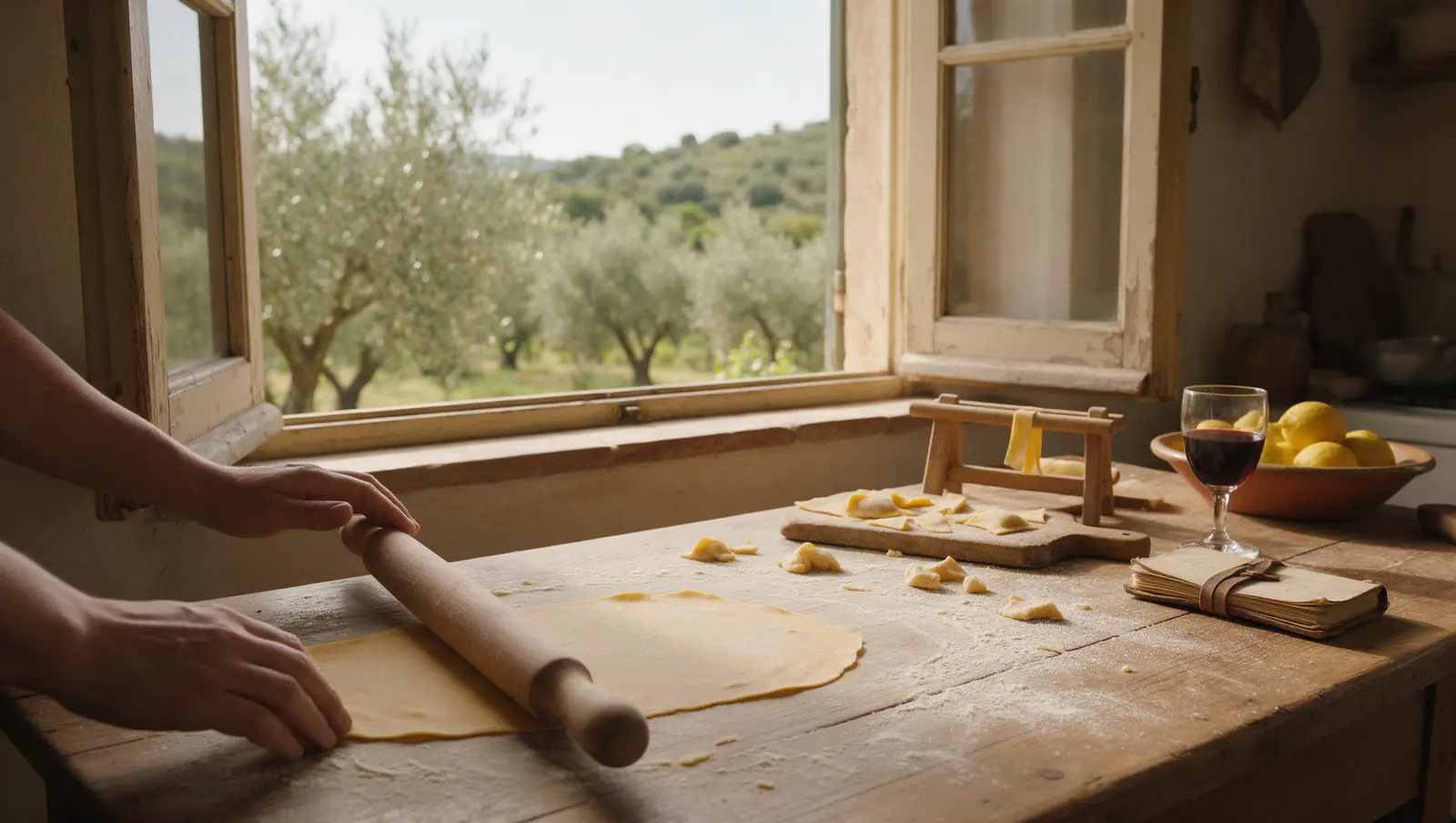
If cooking is one highlight among many on your trip, book a day class. If cooking is the reason for the trip, book a cooking vacation. That is the short answer, and it holds for most travelers.
A day class takes a few hours, slots into a city itinerary, and teaches you a handful of dishes well. A cooking vacation runs several days to a week, usually includes accommodation and meals, and builds in market visits, producer tours and wine. It goes deeper, costs more and asks you to commit a large part of your trip to one place.
The rest of this guide walks through the real differences, the questions that tend to settle the decision, and a middle path that suits a lot of people.
What each format actually involves
The day class
A typical cooking class in Italy lasts around three to four hours. You meet at a home, a dedicated kitchen or a farmhouse, cook two to four dishes (often fresh pasta, a sauce and a dessert), then sit down to eat what you made, usually with wine. Some include a market visit at the start, which adds an hour or two. Groups range from private sessions to a dozen or more people at a shared table.
The cooking vacation
A cooking vacation, sometimes called a cooking holiday or culinary tour, is a package of several days, commonly between three nights and a week. Most are in the countryside, often in Tuscany, Umbria, Puglia or Sicily, and are based at a villa, farmhouse or agriturismo. A typical program mixes a hands-on lesson most days with excursions: a cheese maker, an olive mill, a winery, a local market or a nearby town. Accommodation, most meals and transport for the excursions are usually included, though flights and transfers usually are not.
Between the two sit a few hybrids worth knowing about: half-day food tours that end with a short cooking session, winery visits with a lunch you help prepare, and multi-day courses in cities where you sleep in your own hotel and come back to the same kitchen each morning. These are less common than the two main formats, but they can be a good fit if neither extreme quite works for you.
Side by side
| Day class | Cooking vacation | |
|---|---|---|
| Time | About 3 to 6 hours | Usually 3 to 7 nights |
| Rough cost | Often around 70 to 200 euros per person for a group class, more for private | Often in the low thousands of euros per person for a week, varying widely with accommodation |
| Location | Mostly cities and popular towns | Mostly countryside |
| Depth | A few dishes, one cuisine snapshot | A regional repertoire, plus producers and context |
| Flexibility | Easy to fit around other plans | Shapes the whole stay |
| Social side | One shared meal with strangers | Several days with the same small group |
The cost figures are rough ranges to help you budget, not quotes. Our ranked guides give current details for each program.
When a day class is the better choice
A day class tends to suit you if:
- You are visiting several cities. A classic first trip of Rome, Florence and Venice leaves little room for a week in one place. A class in each city lets you compare regional cooking along the way.
- You are traveling with mixed interests. Partners, friends or kids who are less excited about cooking can usually manage an afternoon, but may not enjoy a full week of it.
- You want to try before you commit. One class is a low-risk way to find out whether you enjoy cooking in a group setting.
- Budget matters. Even an expensive day class costs a fraction of a week-long program.
- You want a specific skill. Pizza, gelato, fresh pasta or bread classes focus on one thing and are often taught by specialists.
Rome and Florence have some of the widest choice. See our guides to cooking classes in Rome and cooking classes in Florence for ranked options.
When a cooking vacation is worth it
A multi-day program tends to suit you if:
- Food is the main reason for the trip. A week lets you cook a wide range of dishes and see where the ingredients come from.
- You want to slow down. Staying in one place, with logistics handled, is restful in a way that moving between cities is not.
- You are traveling alone. Small-group programs give solo travelers built-in company at meals. We have a separate guide to cooking vacations for singles over 40.
- You want context, not just recipes. Visiting an olive mill or a cheese maker between lessons explains why the food tastes the way it does.
- You would rather not drive in rural Italy. Many programs include transport to excursions, which makes the countryside accessible without a rental car.
The main risks are fit and pace. You will spend a lot of time with the same group and the same hosts, so read the daily schedule carefully, check how much free time there is, and ask how many lessons are hands-on rather than demonstrations.
The middle path: a countryside stay with classes
Many travelers end up somewhere in between. You book a few nights in a farmhouse or villa that offers cooking classes on site, take two or three lessons, and spend the rest of the time exploring on your own. You get the rural setting and repeated time in a kitchen, without committing every day to a group program.
This works especially well in Tuscany, where many properties offer this kind of arrangement. Our guide to Tuscany cooking classes with accommodation covers this style of stay. Another version is to base yourself in one city for a week and book two or three different day classes, perhaps one for pasta, one with a market visit and one for pizza or gelato. Different teachers will show you different habits, and comparing them is part of the fun.
Questions that settle the decision
If you are still undecided, these questions usually make the answer clear:
- How many days in total do you have in Italy, and how many could you give to one place?
- Is everyone in your group equally interested in cooking?
- Would you rather see more of Italy, or see one region in depth?
- Do you want accommodation and meals handled for you?
- Is your goal a fun experience, or real skills you will use at home?
If the answers lean toward short time, mixed interests and seeing more, a day class is the better fit. If they lean toward food as the focus, depth and being looked after, a cooking vacation is.
Find the right program
For multi-day options, start with our comparison of Italy cooking vacations. For single sessions across the country, our guide to the best Italian cooking classes in Italy is the broadest list, and the regional guides linked above narrow it down by city.
Frequently asked questions
Do I need cooking experience for either format?
Usually not. Most day classes and cooking vacations are designed for home cooks of any level. If you are more advanced, look for programs that mention professional training or small group sizes, and ask the organizer what level they teach to.
Can non-cooking partners join a cooking vacation?
Many programs offer a lower rate for guests who join the meals and excursions but skip the lessons. Policies vary, so ask before booking.
Are dietary restrictions handled on cooking vacations?
Most organizers can adapt for common needs such as vegetarian or gluten-free diets if told in advance. Over a whole week this matters more than in a single class, so confirm the details in writing.
What is the difference between a cooking vacation and a cooking school?
A cooking vacation is a leisure trip built around lessons. A cooking school in the professional sense offers structured courses lasting weeks or months, sometimes with certification, aimed at people who want to cook for a living.
Is a private class worth the extra cost?
It can be if you have specific dishes in mind, dietary needs, or a family group with children. You get the teacher's full attention and can set the pace, though you lose the social side of a shared table.
- cooking classes
- Cooking Vacations
- Travel tips
- Planning