
Fresh pasta vs dried pasta: when each is the right choice
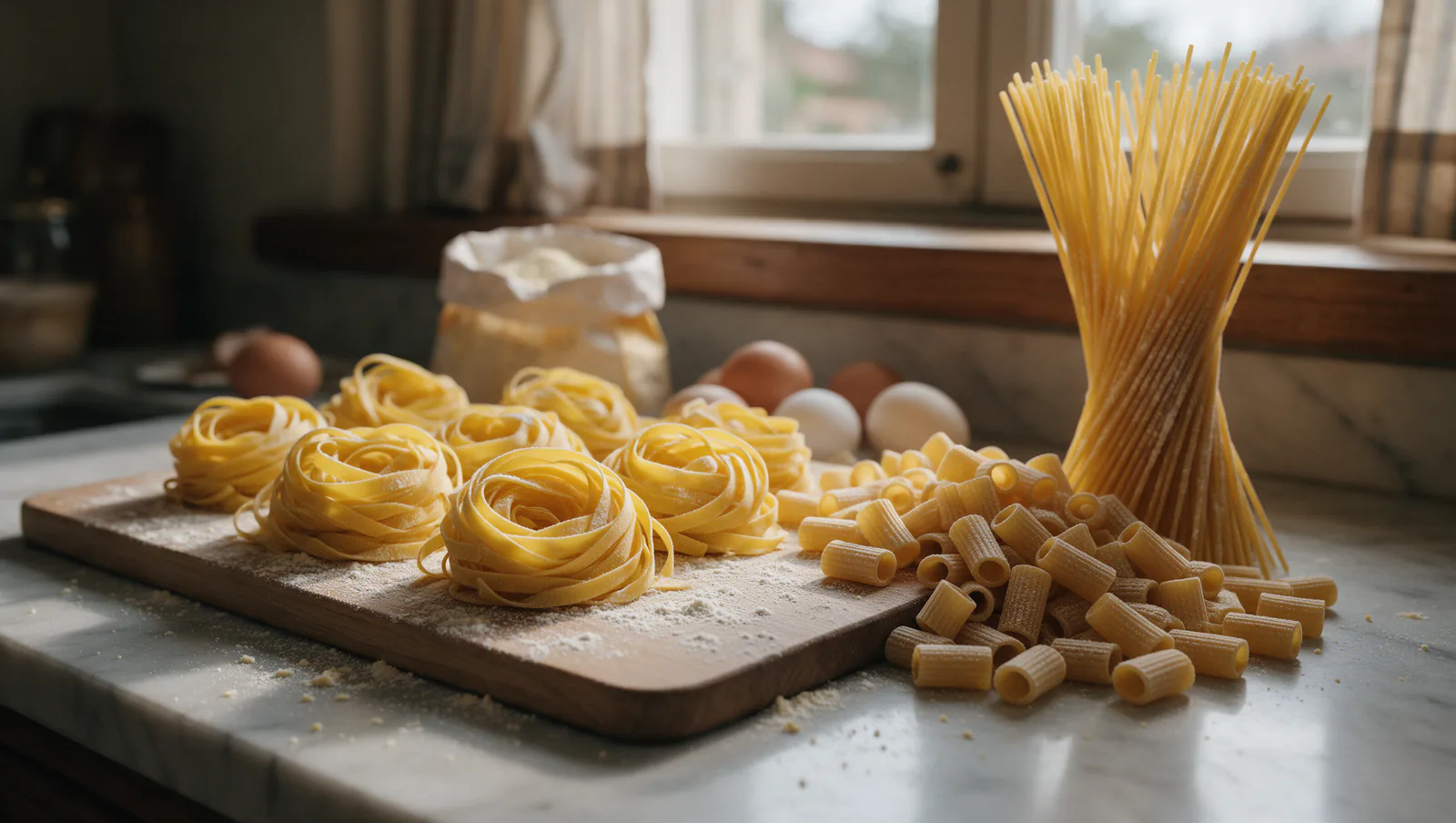
Fresh pasta is not better than dried pasta, and dried pasta is not a shortcut. They are two different ingredients, and Italian cooks choose between them based on the sauce and the dish. As a rule of thumb, fresh egg pasta suits butter, cream, cheese and meat ragù, while good dried pasta suits olive oil, tomato, vegetables and seafood.
That rule has exceptions, and it helps to know why it works. Below we explain what each type is, how they behave in the pot and on the plate, which classic dishes use which, and how to buy and cook both well.
What fresh pasta and dried pasta actually are
Dried pasta (pasta secca) is made from durum wheat semolina and water, pushed through a die to shape it, then dried slowly. In Italy, dried pasta sold commercially must by law be made from durum wheat. Its strength is structure: it holds its shape, stays firm, or al dente, and keeps a slight bite even under a heavy sauce.
Fresh pasta (pasta fresca) comes in two main families:
- Egg pasta, typical of the north and especially Emilia-Romagna, made from soft wheat flour (often Italian 00) and eggs. It is tender, rich and slightly porous, and it is rolled into sheets for tagliatelle, lasagne, ravioli and tortellini.
- Semolina and water pasta, typical of the south, made from durum wheat semolina and water with no egg. Orecchiette, cavatelli and many hand-shaped pastas belong here. It is chewier than egg pasta.
So the real divide is less about fresh versus dried and more about egg and soft wheat versus durum wheat and water. That explains most pairings.
How they differ on the plate
| Fresh egg pasta | Dried durum wheat pasta | |
|---|---|---|
| Texture | Soft, silky, tender | Firm, springy, al dente |
| Cooking time | About 1 to 4 minutes | Usually 8 to 14 minutes |
| Best sauces | Butter, cream, cheese, meat ragù | Olive oil, tomato, vegetables, seafood |
| Shelf life | A day or two in the fridge, or frozen | Many months in the pantry |
| Typical shapes | Tagliatelle, pappardelle, filled pasta, lasagne | Spaghetti, penne, rigatoni, linguine, paccheri |
Fresh egg pasta absorbs fat well, which is why butter and Parmigiano Reggiano or a meat ragù cling to it so nicely. But it can turn soft or gluey with a watery sauce or a long toss in the pan. Dried pasta releases starch into its cooking water and can be finished in the pan with that water, which is how emulsified sauces such as cacio e pepe or aglio, olio e peperoncino come together.
Classic dishes and which pasta they use
Dishes made with fresh egg pasta
- Tagliatelle al ragù in Bologna, where the meat sauce needs a wide, porous ribbon.
- Tortellini in brodo and other filled pastas, which can only be made fresh.
- Lasagne alla bolognese, with thin egg sheets layered with ragù and béchamel. Our lasagna Bolognese recipe shows the method.
- Pappardelle with game ragù in Tuscany, and tajarin with butter in Piedmont.
Dishes made with dried pasta
- The Roman pastas, carbonara, cacio e pepe, amatriciana and gricia, are made with dried spaghetti, rigatoni, tonnarelli or bucatini. Tonnarelli are often fresh, which shows the rule is a guide, not a law.
- Spaghetti alle vongole and most seafood pastas along the coast.
- Pasta al pomodoro and southern tomato sauces, which need firmness to stand up to acidity and liquid.
- Pasta e fagioli and other soups with short dried shapes.
Southern fresh pasta
Orecchiette with cime di rapa, cavatelli with mussels and beans, and Sicilian busiate with pesto trapanese use fresh semolina pasta. They behave more like dried pasta than like egg pasta, so they work with olive oil and vegetable sauces.
How to buy good dried pasta
Not all dried pasta is equal, and the difference is easy to see once you know what to look for.
- Bronze-die extrusion. Pasta pushed through bronze dies, labeled trafilata al bronzo, has a rough, slightly chalky surface that holds sauce better than the glossy surface of pasta made with Teflon dies.
- Slow drying. Some producers dry pasta at lower temperatures for longer. It is often mentioned on the package and tends to give a better texture.
- Ingredients. Durum wheat semolina and water should be all there is.
- Protected names. Pasta di Gragnano IGP, from the town of Gragnano near Naples, is a well-known example of a protected dried pasta.
Store-bought fresh pasta is a different story. The vacuum-packed kind sold in supermarket fridges is convenient, but it is often thicker and less delicate than pasta made the same day. If you can buy fresh pasta from a shop that makes it on site, or make it yourself, the difference is clear. Otherwise, a good dried pasta is usually the better choice over a mediocre fresh one.
A quick way to decide
Ask two questions. Is the sauce built on butter, cream, cheese or slow-cooked meat? Fresh egg pasta is a natural fit. Is it built on olive oil, tomatoes, vegetables or seafood, or does it need to be emulsified with pasta water? Reach for dried. When in doubt, follow the regional tradition of the dish.
How to cook each one well
Both types need plenty of well-salted boiling water. A reliable guide is about 1 liter (about 1 quart) of water per 100 g (3.5 oz) of pasta, salted with about 10 g per liter, which is roughly 1 1/2 teaspoons of fine sea salt per quart. You can use less water for dried pasta if you stir well in the first minute.
Dried pasta: start tasting a minute or two before the package time. Drain it while still slightly firm, keep a cup of the starchy water, and finish it in the pan with the sauce for a minute, adding water to loosen. This step is what makes a sauce cling rather than pool.
Fresh egg pasta: it cooks fast, so have the sauce ready before the pasta goes in. Thin ribbons need only a minute or two after the water returns to a boil, and filled pasta a few minutes more. Toss it gently and briefly.
A basic egg dough, for four: 400 g (about 3 1/4 cups) of 00 flour or all-purpose flour and 4 large eggs. Knead for about 10 minutes until smooth, wrap and rest for 30 minutes, then roll thin. The usual rule is roughly 100 g (3/4 cup plus 1 tablespoon) of flour per egg, adjusting with a little flour or water as needed.
Learn both techniques
Making fresh pasta by hand is the most popular skill taught in Italian cooking classes, and it is far easier to learn with someone watching your dough. Our guide to the best pasta making classes in Italy compares the options across the country. If you are not traveling, there are strong options closer to home, such as pasta making classes in NYC and pasta making classes in London, or you can learn from your own kitchen with online pasta making classes.
Frequently asked questions
Can I substitute fresh pasta for dried in a recipe?
Often, but adjust the timing and the sauce. Fresh pasta cooks in a fraction of the time and absorbs more sauce, so use about a third more fresh pasta by weight, since it contains water, and add it to the pan at the last moment.
Is fresh pasta healthier than dried?
Not in any important way. Egg pasta has a little more fat and protein from the eggs, while dried pasta is denser by weight because it contains less water. Portion size and sauce matter far more than the type of pasta.
Can I dry my own fresh pasta to store it?
You can air-dry egg ribbons in loose nests for a day and keep them for a short while, but home-dried egg pasta can crack and is less stable than commercial dried pasta. For longer storage, freezing fresh pasta on a floured tray and then bagging it is safer and more reliable.
Should I add oil to the pasta water?
There is no need. Oil floats on top and does little to stop sticking. Plenty of water and a good stir right after the pasta goes in do the job, and oil can make sauces slide off the pasta.
- italian cooking
- Fresh Pasta
- pasta
- Cooking tips