
How Italians really eat: meal order, aperitivo and coffee rules
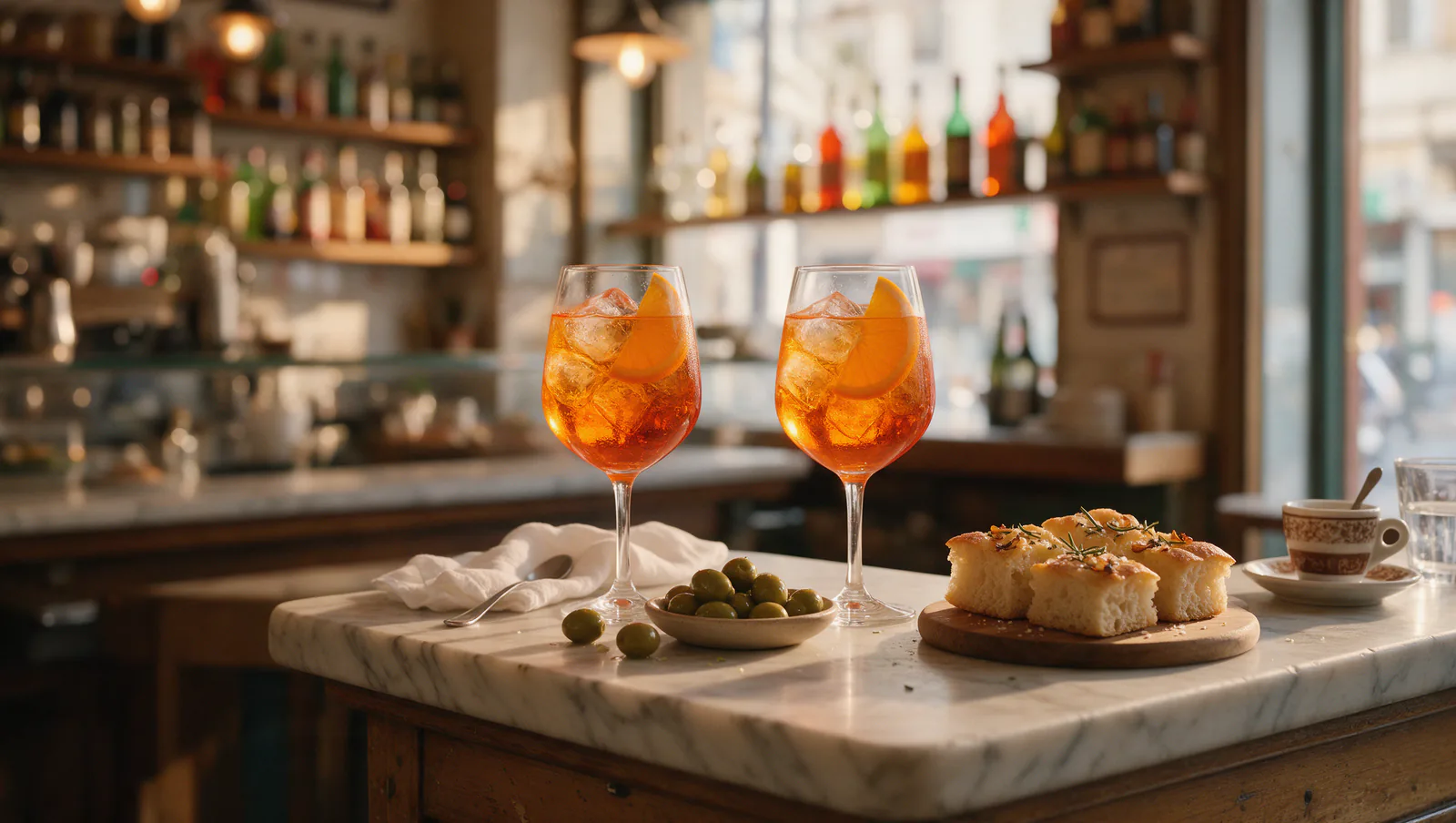
Italians eat in a clear sequence: a light breakfast, a proper lunch, an early-evening aperitivo, and a late dinner that can run through antipasto, primo, secondo with a side, and dessert, finished with an espresso. That is the full framework. In daily life most people pick two or three of those courses, not all of them, and you can do the same without anyone blinking.
The coffee customs are real but gentler than the internet suggests. Cappuccino is mostly a morning drink, espresso is what people have after a meal, and asking for "a latte" will usually get you a glass of milk. None of it is a law, and Italians are used to visitors. Knowing the habits simply makes ordering easier and helps you eat the way the food was designed to be eaten.
Below we walk through the day in order, explain each course, and cover the small things (bread, cheese, the cover charge, tipping) that tend to puzzle first-time visitors.
The shape of an Italian day of eating
Timing is the first adjustment. Breakfast (colazione) is small and often sweet, eaten quickly. Lunch (pranzo) usually starts somewhere around 12:30 to 1:30 pm, and many kitchens stop taking orders by roughly 2:30 or 3 pm. Then there is a long gap. Dinner (cena) generally begins around 8 pm, and later in the south and in summer, when 9 pm or after is normal.
That gap is why aperitivo exists, and it is also why restaurants that open at 6 pm and fill up immediately are often catering to visitors. If you want a local crowd, book for 8 or 8:30 pm, and expect some places to be closed between lunch and dinner service. Bars, bakeries and cafés stay open through the afternoon, so you will never go hungry.
Breakfast in a bar is typically a cornetto (the Italian cousin of the croissant, often a little sweeter and softer) with a cappuccino or espresso, taken standing at the counter. Savory hotel breakfasts with eggs and ham exist, but they are a concession to travelers rather than an Italian habit.
The full meal, course by course
A traditional multi-course meal follows this order. Think of it as a menu structure, not a checklist.
- Antipasto. Starters such as cured meats, cheeses, marinated vegetables, bruschetta or a small seafood plate on the coast.
- Primo. The first course: pasta, risotto, gnocchi or soup. Portions are designed to be followed by something else, so they can look modest.
- Secondo. The main course of meat or fish. It usually arrives on its own.
- Contorno. A vegetable side, ordered separately and served alongside the secondo: roast potatoes, greens sautéed with garlic, a simple salad.
- Formaggi and frutta. Cheese, fruit or both, more common at home and at long celebrations than in a quick restaurant meal.
- Dolce. Dessert.
- Caffè. An espresso, after dessert rather than with it.
- Digestivo. An optional small glass of amaro, grappa or limoncello.
In practice, a typical restaurant dinner might be an antipasto to share, a primo each, and a coffee. Or a primo and a contorno. Or just a secondo with a side. Ordering only pasta is completely normal. What is less common is treating pasta as a side dish next to the meat on the same plate, since the primo and secondo are meant to be separate moments.
Salad, when it is part of the meal, often comes with or after the main course rather than before it. Bread is on the table throughout, though it is not usually served with a dish of olive oil for dipping. It is there to eat alongside the food and, informally, to wipe up the last of a sauce, a habit called fare la scarpetta that is more welcome at a family trattoria than at a formal dinner.
If you want to see how this plays out city by city, our guides on how to eat like a local in Florence and eating like a local in Taormina go into regional detail.
Aperitivo: the hour before dinner
Aperitivo is a pre-dinner drink, usually taken somewhere between about 6 and 8:30 pm, meant to open the appetite rather than replace dinner. You order a drink and it typically comes with something small to eat: olives, chips, nuts, a few bites of focaccia or cheese. In some cities, Milan in particular, bars put out a larger buffet with the drink, and for some people that becomes a light dinner, known informally as apericena.
Classic aperitivo drinks are on the bitter, low-alcohol side:
- Spritz, made with prosecco, a bitter liqueur and a splash of soda, closely associated with the Veneto.
- Negroni, gin, sweet vermouth and Campari, widely credited to Florence, although like many cocktail origin stories the details are debated.
- Americano, the gentler cousin of the Negroni with soda in place of gin.
- A glass of local wine or prosecco, or a non-alcoholic bitter for those not drinking.
The point is to be social and unhurried. Italians rarely drink heavily at aperitivo, and drinking without eating anything is uncommon. Treat it as a bridge between the afternoon and dinner, not a happy hour.
Coffee habits worth knowing
Coffee in Italy has a vocabulary of its own, and a few habits that are worth understanding before you step up to a bar.
- "Un caffè" means an espresso. You do not need to say "espresso" at all.
- Cappuccino is mostly a morning drink. Many Italians avoid milky coffee after lunch because it feels heavy after a meal. You can order one at 4 pm and the barista will make it, but after dinner it does mark you as a visitor.
- Latte means milk. For the glass of steamed milk with a shot of espresso, ask for a latte macchiato, or a caffè latte.
- Caffè macchiato is an espresso with a small spot of milk foam, a common afternoon compromise.
- Caffè americano exists in most bars: espresso lengthened with hot water. It will not be identical to filter coffee at home.
- Caffè corretto is espresso "corrected" with a splash of grappa or another spirit.
Coffee is usually drunk quickly, standing at the counter. In many bars, especially in busy city centers, sitting at a table costs more than standing, sometimes considerably more, because you are paying for table service. In some places you pay at the till first and take your receipt to the counter. Watch what the person in front of you does and you will pick it up immediately.
Iced coffee and large takeaway cups have become more common in recent years, particularly in big cities, but coffee as something you carry around for an hour is still not the norm.
Small customs at the table
A handful of other habits come up again and again:
- Cheese on seafood. Grated cheese on fish or seafood pasta is generally avoided, on the reasoning that it overwhelms delicate flavors. There are regional exceptions, and nobody will refuse you, but if a server does not offer cheese, that is usually why.
- Coperto. Many restaurants add a per-person cover charge for bread and table setting. It is legal and should be listed on the menu. Some cities and restaurants use a service charge (servizio) instead.
- Tipping. Tipping is not expected the way it is in the US. Rounding up or leaving a few euros for good service is appreciated, but a 20 percent tip is not part of the culture.
- Asking for the bill. Servers will rarely bring the check unprompted, since rushing guests is considered rude. Ask for il conto when you are ready.
- Water. You will be asked whether you want naturale (still) or frizzante (sparkling). Bottled water is the default in most restaurants.
- Gelato. An afternoon or evening walk with a gelato is a ritual of its own. Our explainer on Italian gelato vs ice cream covers what makes it different.
Learning the rhythm in a kitchen
The fastest way to understand why the Italian meal is built the way it is, is to cook one. A good class usually walks you through a full sequence, such as a simple antipasto, a fresh pasta as primo and a dessert, then sits everyone down to eat in the proper order with wine. You come away with recipes, but also with a sense of pacing that is hard to get from reading menus.
For classes that follow that format in the places most visitors start, see our ranked guides to cooking classes in Rome and cooking classes in Bologna, a city that takes its table seriously. If you are still choosing a region, our overview of the best Italian cooking classes in Italy compares options across the country.
Frequently asked questions
Is it rude to order only one course in an Italian restaurant?
No. Ordering a single primo or a secondo with a side is common, especially at lunch. Some upscale restaurants with tasting-style menus may expect more, but an ordinary trattoria will not mind at all.
Can I ask for changes to a dish in Italy?
Small requests for allergies or dietary needs are usually accommodated, and you should always mention allergies clearly. Asking to swap ingredients on a traditional dish is less common and may be politely declined, since many kitchens cook a set version.
What do Italians eat for a quick lunch?
Options include a panino from a bar, a slice of pizza al taglio, a tavola calda serving ready-made dishes, or a single pasta course at a trattoria. Many workers also take a fixed-price lunch menu near their office.
Is decaf coffee easy to find in Italy?
Yes. Ask for a caffè decaffeinato, often shortened to deca. Most bars also offer barley coffee (caffè d'orzo), a caffeine-free alternative some Italians drink in the evening.
Do Italians eat dinner at home or out?
Most dinners happen at home, with restaurant meals saved for weekends, celebrations and gatherings with friends. That is one reason Sunday lunch with family remains such an important, long meal in many households.
- Travel tips
- Italian food culture
- Coffee
- Aperitivo