
How to choose a cooking class in Italy: what to check before you book
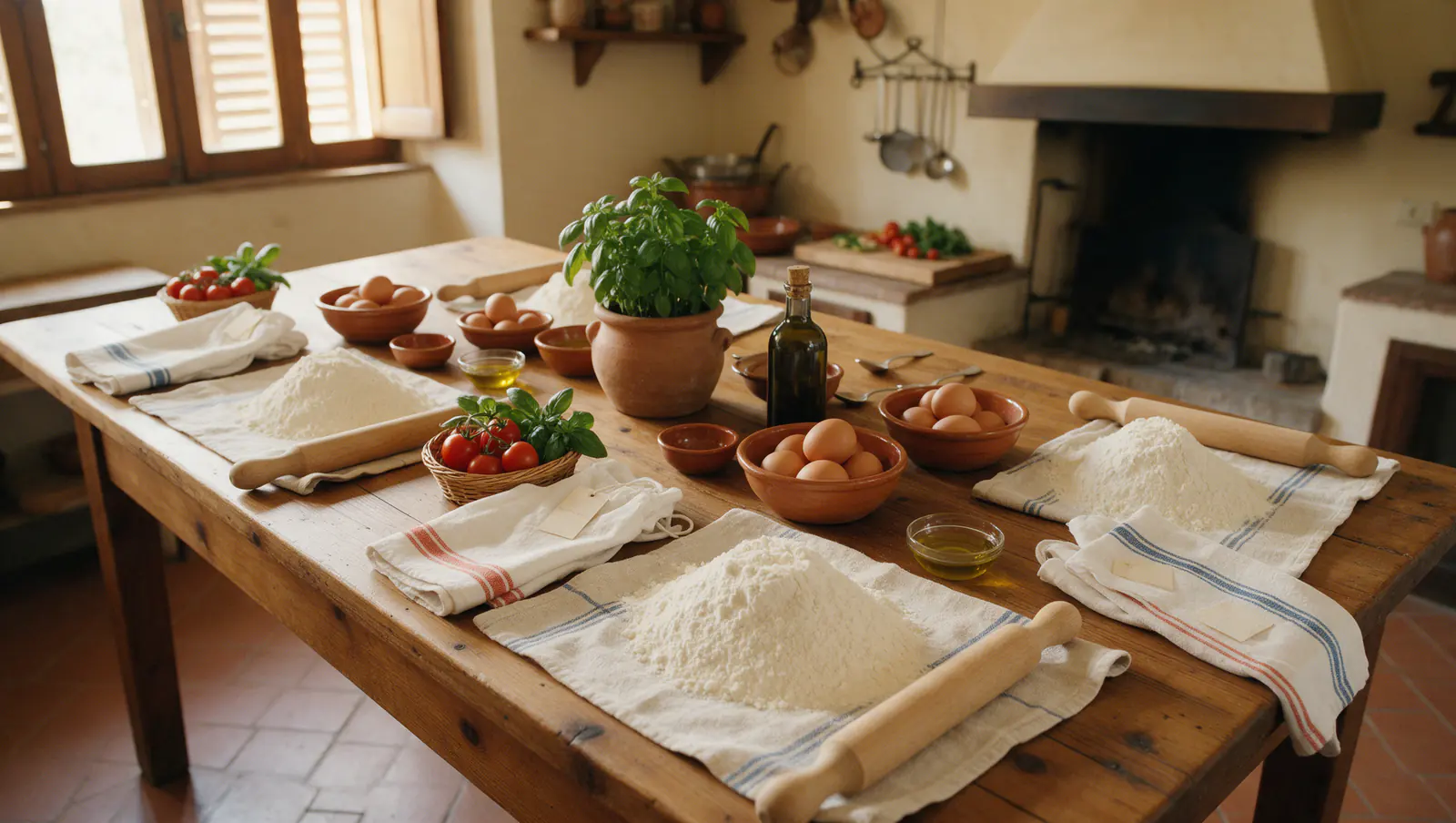
A cooking class is one of the best ways to spend half a day in Italy, but the listings can blur together. Nearly every one promises a local host, a family recipe and a long lunch with wine. The differences that matter are less visible: how many people share the table, how much of the cooking you do yourself, what is actually on the menu, and where the class takes place.
The short version: decide what you want to learn, then check the group size, the hands-on time, the menu, the location and logistics, and the booking terms. If a listing answers all five clearly, it is usually a safe bet. If it is vague on more than one, keep looking.
Below we go through each point, with the questions worth asking before you pay.
Start with what you want to take home
Before comparing classes, be honest about what you want from the day. Most classes fall into a few broad types:
- Pasta-focused classes, where you make one or two fresh doughs and several shapes. Good if you want a skill you will actually repeat at home.
- Full-menu classes, usually a starter, a pasta, a main and a dessert. More variety, less depth on any one thing.
- Market and cooking combinations, which start with a walk through a local market. Great for context, but the market part eats into cooking time.
- Pizza, gelato or bread classes, which are narrower and often shorter.
- Multi-day schools and cooking holidays, for people who want to build real technique over several sessions.
If you only have one free afternoon, a single focused class tends to stick better than a crowded five-course menu. If cooking is the reason for the whole trip, look at longer courses at Italian cooking schools or a residential cooking holiday instead.
Check the group size and the hands-on time
These two details shape the experience more than anything else, and they are linked. In a class of six to ten people, everyone usually gets their own station, their own dough and real attention from the instructor. In a class of twenty or more, it can turn into a demonstration where guests take turns stirring.
What to look for in the listing:
- A stated maximum group size. If it is missing, ask.
- Wording like "each guest makes their own pasta" or "individual workstation", which signals real participation.
- Phrases like "watch our chef prepare" or "assist with", which often mean you will mostly be observing.
- The split between cooking and eating. A four-hour class where the meal takes two hours is really a two-hour class with a long lunch, which is fine, as long as you know that going in.
Private classes solve the group-size question entirely and are worth considering for couples, families or anyone with specific requests. They cost more per person, but you set the menu and the pace.
Read the menu, not just the title
A class called "Traditional Italian cooking" could mean almost anything. The menu tells you what you will really learn. A few things to check:
- Is it regional? Italian food is strongly regional. A class in Bologna that teaches tagliatelle and tortellini, or one in Rome that covers cacio e pepe and carbonara, is teaching what people there actually eat. A generic menu that could be served anywhere is a weaker sign.
- Is it seasonal? Good hosts adjust the menu to what is in the market. A listing that mentions seasonal changes is usually run by people who cook for real.
- How many dishes? Two or three dishes done properly beat five rushed ones. If the menu is long and the class is short, expect some dishes to be prepared in advance.
- Is there a recipe pack? Most classes send or hand out recipes. It is a small thing that makes a big difference once you are home.
Think about location and logistics
Where the class happens changes the whole day. Classes in a city center are easy to reach on foot and fit around sightseeing. Classes in a farmhouse or villa in the countryside often include a garden, a wood-fired oven or a view, but you need to get there and back, sometimes after a few glasses of wine.
- Check whether transport or a pickup is included, and from where.
- Look at the start time. Morning classes often include a market visit and end with lunch; evening classes end with dinner and can run late.
- For countryside classes, plan how you will return. Taxis can be scarce outside towns, and driving after a wine-paired lunch is not a good idea.
- Consider the city. Rome and Florence have the widest choice, so it pays to compare: our guides to cooking classes in Rome and the best cooking classes in Florence narrow it down.
Dietary needs, children and accessibility
Italian cooking classes are generally flexible, but only if you ask in advance. Pasta and pizza classes are built around wheat, so gluten-free versions need different flours and a separate setup. Vegetarian guests are usually easy to accommodate; vegans may find dairy and eggs in most traditional menus and should confirm substitutions.
- Mention allergies and intolerances at booking, not on arrival.
- If you have celiac disease rather than a preference, ask how cross-contamination is handled. Some hosts specialize in this, and our guide to gluten-free cooking classes in Tuscany is a good starting point.
- Check the minimum age. Many classes welcome children, some set an age limit because of knives, hot ovens or wine.
- Ask about stairs and step-free access. Kitchens in historic buildings are often upstairs with no elevator.
Price, reviews and booking terms
As rough guidance, expect group classes in the main Italian cities to cost somewhere between about 70 and 150 euros per person, with private classes, multi-course menus and countryside settings often costing more. Prices vary a lot by season, city and what is included, so treat these as a ballpark rather than a rule.
When you compare prices, compare what is included: a full meal, wine, a market visit, transport and printed recipes all add value. A cheaper class that ends with a small tasting is not the same product as one that ends with a three-course lunch.
Reviews help most when you read them for specifics. Look for recent comments about the instructor, how hands-on it was and how large the group felt. A cluster of reviews mentioning crowding or a changed host is worth more than the overall star rating.
Finally, read the cancellation policy. Plans change on trips, and flexible terms (a free cancellation window of a day or more) are common. Book early for popular cities in spring and early fall, when good small-group classes can fill up weeks ahead.
Find the right class for your trip
Once you know the type of class you want, the group size you are comfortable with and where you will be, the shortlist gets short quickly. Our ranked guides compare classes on exactly these points. Start with the best Italian cooking classes in Italy for an overview across regions, or look at Italy cooking vacations if you want to build several days of your trip around food.
Frequently asked questions
Do I need any cooking experience to take a class in Italy?
No. Most classes are designed for complete beginners, and instructors expect a mix of levels. If you already cook a lot, look for smaller groups or private classes so the pace can match you, or choose a focused class such as pasta or bread rather than a general menu.
Should I book a cooking class before I travel or once I arrive?
Booking ahead is safer, especially for small-group classes in Rome, Florence and Tuscany in spring and early fall. If your plans are loose, book one with free cancellation so you can secure a place without being locked in.
Are cooking classes in Italy taught in English?
Most classes aimed at visitors are taught in English, and many hosts also offer other languages. The listing normally states the language. Some home-cooking experiences with local families may be more informal, so check if clear instruction matters to you.
Is it worth taking a cooking class on the first day of a trip?
Often, yes. You learn what local dishes should taste like and what to look for on menus, which makes the rest of your meals more interesting. A morning class with a market visit is also an easy way to get your bearings in a new city.
What should I wear to a cooking class?
Comfortable clothes you do not mind getting flour on, and closed shoes if possible. Aprons are usually provided. Tie back long hair, and skip rings and bracelets if you will be kneading dough.
- cooking classes
- Italy
- Travel tips
- Planning