
How to make gnocchi that aren't gummy
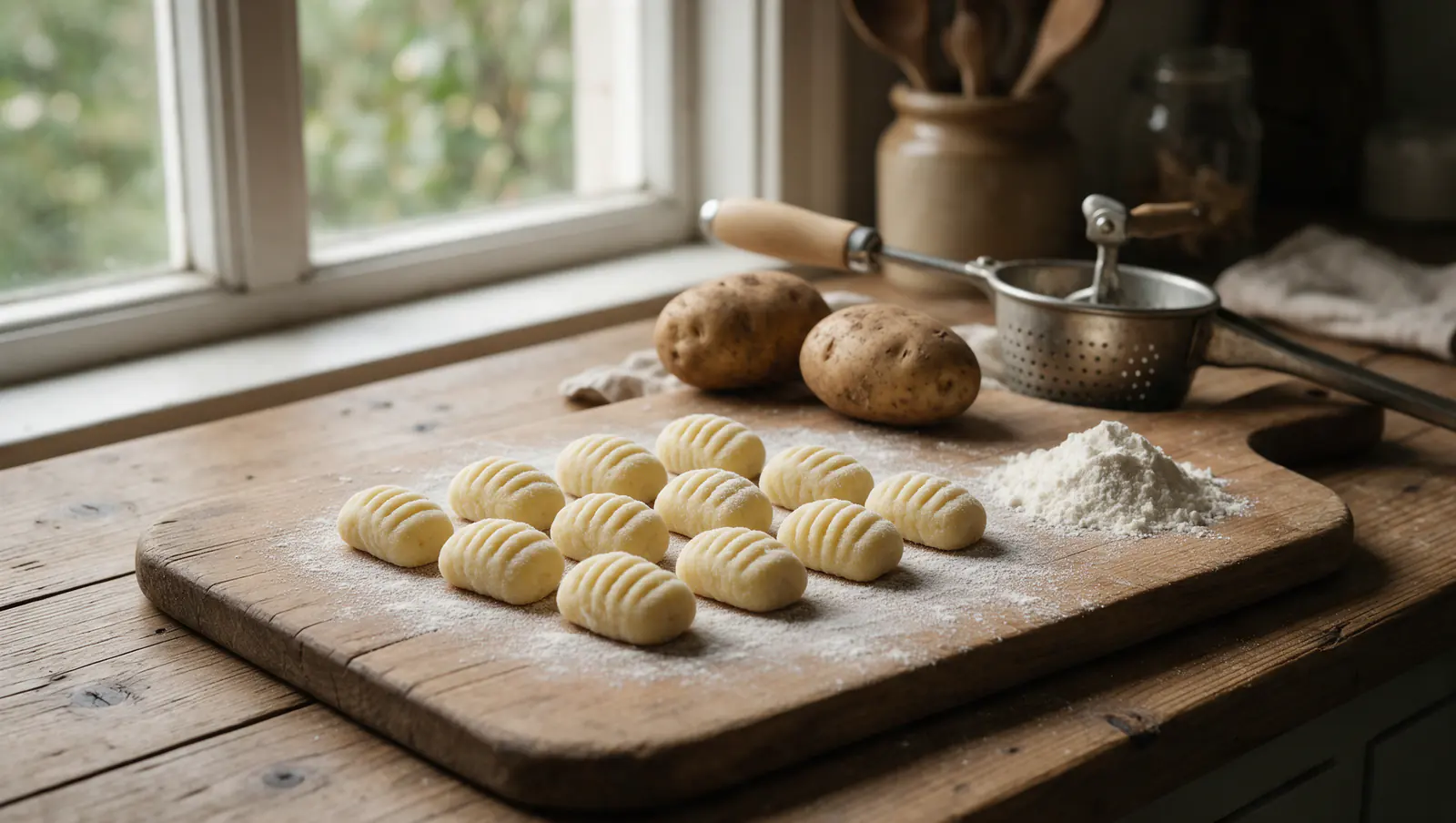
Gnocchi turn gummy for three main reasons: the potatoes hold too much water, the potatoes are mashed too hard, or the dough is worked too much once the flour goes in. Fix those three things and you get gnocchi that are tender and light, with just enough structure to hold their shape in the pot.
In practice that means using a floury, starchy potato, cooking it whole in its skin (or baking it), passing it through a ricer while it is still warm, letting the steam escape, and then adding only as much flour as the dough needs, mixed briefly by hand. No food processor, no long kneading.
Below is the full method with quantities, followed by the most common mistakes and how to rescue a dough that is going wrong.
Why gnocchi go gummy
A potato is mostly water and starch. When you cook it, the starch granules swell. If you then crush the potato roughly, in a blender or food processor or by mashing it hard, many of those swollen cells burst and release sticky starch. That is the gluey texture you get in overworked mashed potatoes, and it carries straight into the gnocchi.
Water is the second problem. A wet potato needs more flour to form a dough, and more flour means heavier gnocchi. Peeling and cutting potatoes before boiling lets water soak in, so whole, skin-on potatoes are the safer starting point.
The third is gluten. Wheat flour develops gluten as you knead it. That is exactly what you want in bread and in egg pasta, but in gnocchi it makes the dumplings chewy and rubbery. The aim is to combine, not knead.
Choosing the right potato
Look for floury, starchy potatoes that are dry and fluffy when cooked. In the US, russets (sometimes sold as Idaho potatoes) are the usual choice. In the UK, Maris Piper or King Edward work well. In Italy, cooks often ask for patate farinose or use older, yellow-fleshed potatoes.
Avoid waxy and new potatoes, such as red-skinned or fingerling varieties. They hold their shape beautifully in salads but are too moist for gnocchi. Older potatoes that have been stored for a while also tend to be drier than freshly dug ones, which helps.
The method, step by step
Ingredients (serves 4)
- 1 kg (2.2 lb) floury potatoes, roughly similar in size
- About 250 to 300 g (2 to 2 1/3 cups) 00 or all-purpose flour, plus extra for dusting
- 1 egg (optional, see below)
- 1 tsp fine salt
Steps
- Cook the potatoes whole. Put them unpeeled in a pot of cold salted water, bring to a boil and simmer until a knife slides easily into the center, usually 30 to 45 minutes depending on size. Alternatively, bake them on a tray at 200°C (400°F) for about an hour. Baking gives drier flesh and is very forgiving.
- Peel while hot. Hold each potato in a clean towel and pull off the skin with a small knife.
- Rice immediately. Push the potatoes through a potato ricer onto a clean work surface, spreading them out in a loose layer. A food mill also works. A masher is acceptable if you are gentle, but a ricer gives the lightest result.
- Let the steam escape. Leave the riced potato for 5 to 10 minutes, until it is warm rather than hot. You will see steam rising. That is water leaving the dough.
- Add flour gradually. Sprinkle about two thirds of the flour and the salt over the potato, add the beaten egg if using, and bring everything together with your hands or a bench scraper, folding rather than kneading.
- Stop when it holds. Add more flour only if the dough is sticky. It is ready when it is soft, slightly tacky and holds together in a smooth ball. This takes a minute or two, no more.
- Test one. Pinch off a small piece and drop it in boiling salted water. If it falls apart, work in a little more flour. If it holds, stop adding flour.
- Shape. Cut the dough into pieces, roll each into a rope about 2 cm (3/4 inch) thick and cut into short lengths. Dust lightly with flour. Leave them as pillows, or roll each one over the back of a fork or a ridged gnocchi board for grooves that hold sauce.
- Cook in batches. Drop the gnocchi into a large pot of well-salted boiling water without crowding. They rise to the surface in a couple of minutes. Let them bob for about 30 seconds to a minute, then lift them out with a slotted spoon straight into the sauce.
Egg or no egg
Both versions are traditional and cooks argue about it. An egg makes the dough easier to handle and more forgiving, especially for a first attempt. Leaving it out gives a slightly lighter, more delicate dumpling but needs a careful hand. If you are new to gnocchi, start with the egg.
Common mistakes and quick fixes
- Dough is wet and sticky. The potatoes were moist. Add flour a spoonful at a time, and next time bake the potatoes or let the riced potato steam longer.
- Gnocchi dissolve in the water. Not quite enough flour, or water that was boiling too violently. Add a little flour to the remaining dough and keep the water at a steady, lively boil rather than a hard rolling one.
- Gnocchi are dense and heavy. Too much flour. Measure it out beforehand and add it gradually, so you are not tempted to keep dusting.
- Gnocchi are chewy. The dough was kneaded. Fold just until combined.
- Gnocchi stick together on the tray. Dust them with flour or semolina and keep them in a single layer, not touching.
- Gnocchi go soft while waiting. Raw gnocchi absorb moisture from the potato as they sit. Cook them within an hour or two, or freeze them.
Sauces, freezing and serving
Potato gnocchi suit simple sauces that coat without drowning them. Classic choices include:
- Butter and sage, with grated Parmigiano Reggiano.
- Tomato and basil, or tomato with mozzarella baked briefly in the oven, the style known as gnocchi alla sorrentina, which you will meet in classes around Sorrento.
- Gorgonzola cream, often with walnuts, a northern favorite.
- Meat ragù, especially in winter.
- Pesto, as in Liguria, sometimes with green beans and potatoes.
To freeze gnocchi, spread the shaped, floured pieces on a tray so they do not touch and freeze until hard, then transfer them to a bag. Cook them straight from frozen in plenty of boiling water. Do not thaw them first, or they turn sticky.
In Rome there is an old custom of eating gnocchi on Thursday, captured in the saying giovedì gnocchi, and some trattorias still keep it. It is a nice reminder that gnocchi are home food: a little rustic, and better for being made by hand.
Learn it hands-on
Gnocchi are much easier to get right once you have felt the dough under a teacher's eye. Most fresh pasta classes include them, and you can find ranked options in our guides to the best pasta making classes in Italy and pasta making classes in Rome. Closer to home, see our lists of pasta making classes in NYC and pasta making classes in London, or learn from your own kitchen with online pasta making classes.
Frequently asked questions
Can I make gnocchi with sweet potatoes?
Yes, but sweet potatoes are much wetter than russets, so you will need noticeably more flour and the result is softer and sweeter. Baking them rather than boiling, and mixing in some ordinary floury potato, both help.
What about ricotta gnocchi?
Ricotta gnocchi are a separate, quicker style made from drained ricotta, flour, egg and grated cheese, with no potato at all. Drain the ricotta well, ideally for a few hours, because excess whey is the main cause of failure.
Can I make the dough ahead and shape it later?
It is not recommended. Potato dough gets wetter as it rests and you end up adding more flour. Shape the gnocchi straight away, then freeze them if you want to cook them another day.
Can gnocchi be made gluten-free?
Yes. A good gluten-free flour blend or rice flour works, since the potato provides most of the structure. The dough is a little more fragile, so including the egg and testing a piece before shaping is especially useful.
- pasta
- Recipes
- Gnocchi
- Technique