
Pasta shapes and the sauces they belong with
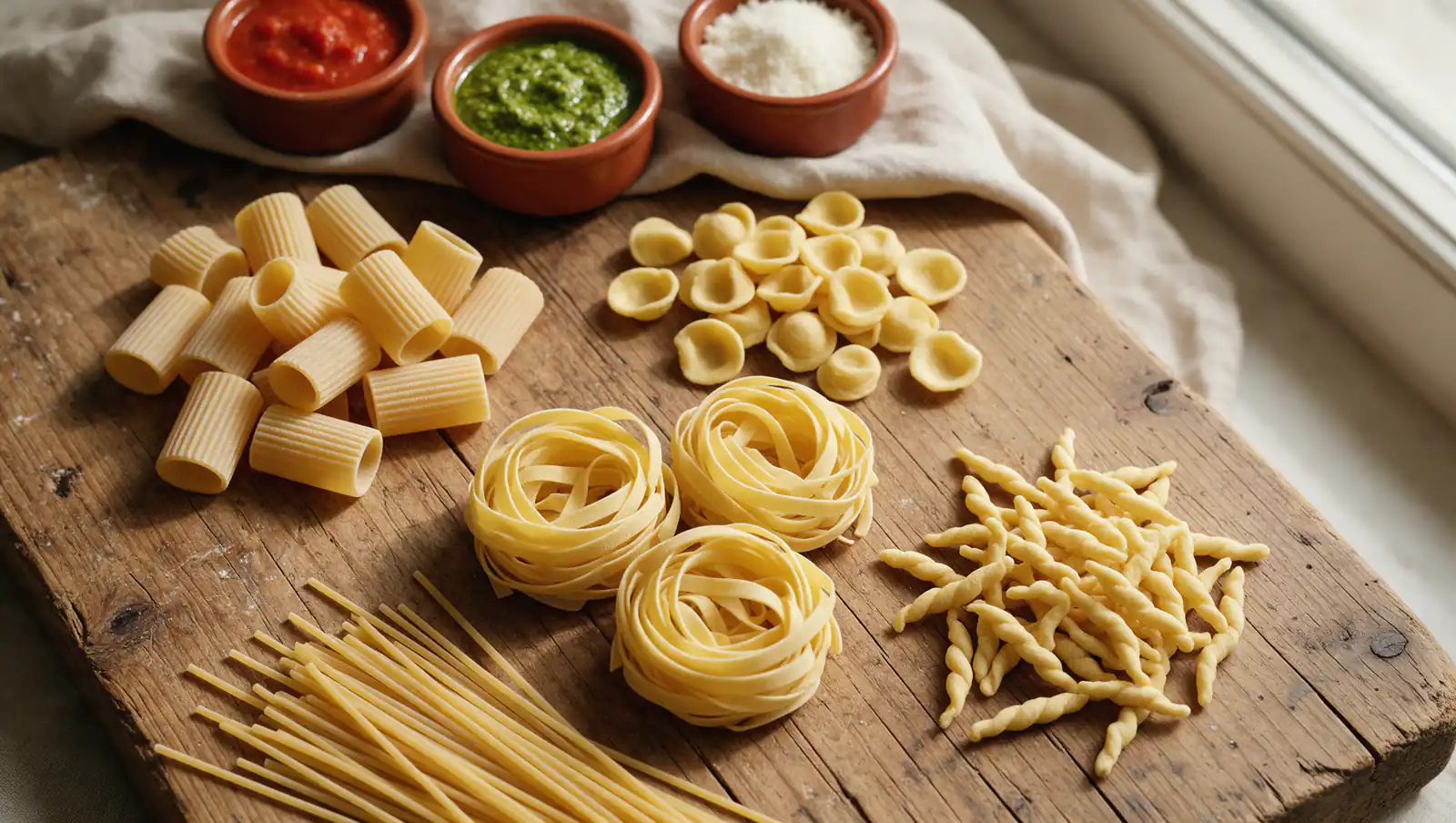
Italy has hundreds of pasta shapes, and Italians tend to have firm opinions about which sauce goes on which. It can look like tradition for its own sake, but most pairings follow a practical logic: the shape should hold the sauce, and the two should have a similar texture and weight in the mouth.
The quick rule of thumb: long, thin pasta suits smooth sauces based on oil, butter, cheese or light tomato; wide egg ribbons suit rich meat ragù; short tubes and ridged shapes suit chunky sauces that need somewhere to lodge; and tiny shapes belong in soups. Beyond that, a lot of pairings are simply regional: they grew up together in the same place.
Here is how it works in practice, with the classic combinations worth knowing.
The basic principle: the shape should carry the sauce
When you eat pasta in Italy, the sauce coats the pasta rather than sitting on top of it in a puddle. For that to work, the surface and shape of the pasta matter.
- Surface area and texture. Dried pasta extruded through bronze dies has a rough, slightly chalky surface that sauce clings to. Fresh egg pasta is smoother but absorbs butter and ragù well.
- Hollows and ridges. Tubes, shells and ridged shapes (rigate) trap pieces of vegetable, sausage or cheese.
- Thickness. A delicate sauce gets lost on a thick, chewy shape, and a heavy sauce overwhelms a thin strand.
Italians also use far less sauce than many people expect. The aim is for every piece to be coated, with nothing left pooling in the bowl.
The other half of the trick is technique. Italian cooks drain pasta a minute before it is done, then finish it in the pan with the sauce and a splash of the starchy cooking water. The starch helps the sauce emulsify and bind to the pasta, so even a simple sauce of oil and garlic turns glossy rather than greasy. The right shape helps, but this final minute in the pan does as much of the work.
Long, thin pasta: spaghetti, linguine and friends
Long thin strands work best with sauces that are smooth enough to coat them evenly. Think oil, garlic and chili, light tomato sauces, seafood cooked in olive oil and white wine, or emulsified cheese sauces.
- Spaghetti with clams (alle vongole), with garlic, oil and chili (aglio, olio e peperoncino), or with a simple tomato sauce.
- Linguine, slightly flattened, is a common partner for seafood and for pesto in Liguria.
- Bucatini, thick hollow strands, are the classic Roman choice for amatriciana.
- Spaghetti alla chitarra and tonnarelli, square-edged strands, hold cheese-and-pepper sauces well.
Chunky sauces with large pieces tend to slide off long strands and collect at the bottom of the plate, which is why you rarely see them paired in Italy. The thinnest strands, such as capellini (angel hair), are delicate enough that they are often used in broth or with the lightest of sauces.
Egg ribbons and rich ragù
Fresh egg pasta from northern and central Italy, rolled thin and cut into ribbons, is built for rich sauces. The porous surface and wide shape catch a slow-cooked meat ragù or melted butter.
- Tagliatelle with ragù alla bolognese is the classic of Bologna. In Bologna itself, ragù is traditionally served on tagliatelle, in lasagne or with other fresh pasta, rather than on spaghetti.
- Pappardelle, the wide ribbons of Tuscany, often come with game ragù such as wild boar or hare.
- Fettuccine, the Roman cousin of tagliatelle, is served with ragù or with butter and Parmigiano Reggiano.
- Lasagne sheets layer ragù and béchamel in the Emilian style. Our lasagna Bolognese recipe shows how the two work together.
Short shapes for chunky and baked sauces
Short pasta is the workhorse for sauces with texture. Tubes and twists give the sauce something to grip and pockets to fill.
- Rigatoni, wide ridged tubes, are a Roman favorite for carbonara, gricia and sauces with offal or sausage.
- Penne suit tomato-based sauces with a kick, such as arrabbiata.
- Paccheri, very large smooth tubes from Campania, go with seafood or a long-cooked Neapolitan ragù.
- Fusilli spirals trap thick vegetable sauces and pesto.
- Ziti and other sturdy tubes hold up to baking in the oven.
Shapes like conchiglie (shells) work in a similar way, scooping up peas, beans or bits of sausage.
Regional pairings that grew up together
Some combinations are less about physics and more about place. The pasta and sauce come from the same area and are rarely separated there.
| Pasta | Sauce | Region |
|---|---|---|
| Trofie or trenette | Pesto alla genovese | Liguria |
| Orecchiette | Cime di rapa (turnip greens) | Puglia |
| Tagliatelle | Ragù alla bolognese | Emilia-Romagna |
| Tortellini | In broth (in brodo) | Emilia-Romagna |
| Pici | Aglione (garlic and tomato) or cacio e pepe | Tuscany |
| Bigoli | In salsa (onion and anchovy) | Veneto |
| Malloreddus | Sausage and tomato (alla campidanese) | Sardinia |
In Liguria, pesto with trofie or trenette is sometimes finished with boiled potatoes and green beans cooked in the same pot as the pasta. In Puglia, orecchiette and greens are cooked together too, then tossed with garlic, chili and often anchovy in olive oil. These dishes taste best where they come from, and a local class is the easiest way to learn them: see our guides to cooking classes in Genoa and cooking classes in Puglia.
Filled pasta, soups and butter
Filled pasta carries its own flavor, so the sauce is usually simple. Ravioli and tortelloni with ricotta and spinach are often served with butter and sage, or a light tomato sauce. Tortellini, small and meat-filled, are traditionally served in a clear meat broth, especially in winter; serving them with cream is common outside Bologna but considered a departure from tradition by many there.
Small shapes such as ditalini, stelline or broken spaghetti are used in soups like pasta e fagioli and minestrone. Their size means you get pasta, beans and broth in each spoonful.
A few pairings to avoid if you want to cook the Italian way: heavy cream sauces on delicate fresh pasta, chunky sauces on angel hair, and cheese on most seafood pasta. These are customs rather than laws, and you will find exceptions, but they explain a lot of raised eyebrows in Italian restaurants.
Learn the pairings in the kitchen
The best way to understand why a shape suits a sauce is to make both. Many classes teach a fresh pasta and its traditional partner side by side. Start with the best pasta-making classes in Italy, or go to the source with cooking classes in Bologna for tagliatelle and tortellini, and pasta-making classes in Tuscany for pici and pappardelle.
Frequently asked questions
Is it wrong to eat spaghetti bolognese?
Not wrong, just not how it is done in Bologna, where the meat ragù is served on fresh egg pasta such as tagliatelle. Spaghetti with meat sauce is popular abroad, and it tastes fine, but if you order it in Bologna you will likely be steered toward tagliatelle.
Can I swap dried pasta for fresh in a recipe?
Sometimes. Dried and fresh pasta are different products rather than better and worse versions of each other. Dried durum wheat pasta suits oil-based and seafood sauces in the south, while fresh egg pasta suits butter and ragù in the north. Swapping changes the texture of the dish, and cooking times differ a lot.
Why do some pasta shapes have ridges?
Ridges, marked rigate on the package, give sauce more surface to grip and help hold small pieces. Smooth versions (lisce) are preferred for some dishes and some cooks find them more pleasant to eat. Both are traditional.
Does the brand or type of dried pasta matter?
It can. Look for pasta made from durum wheat semolina, ideally bronze-die extruded, which leaves a rougher surface that holds sauce. Slow-dried pasta also tends to keep its texture better when cooked. Price is not a guarantee, so check the label for these details.
- Bologna
- pasta
- Sauces
- Regional cooking
- Liguria