
Risotto across Italy: Milanese, Venetian and beyond
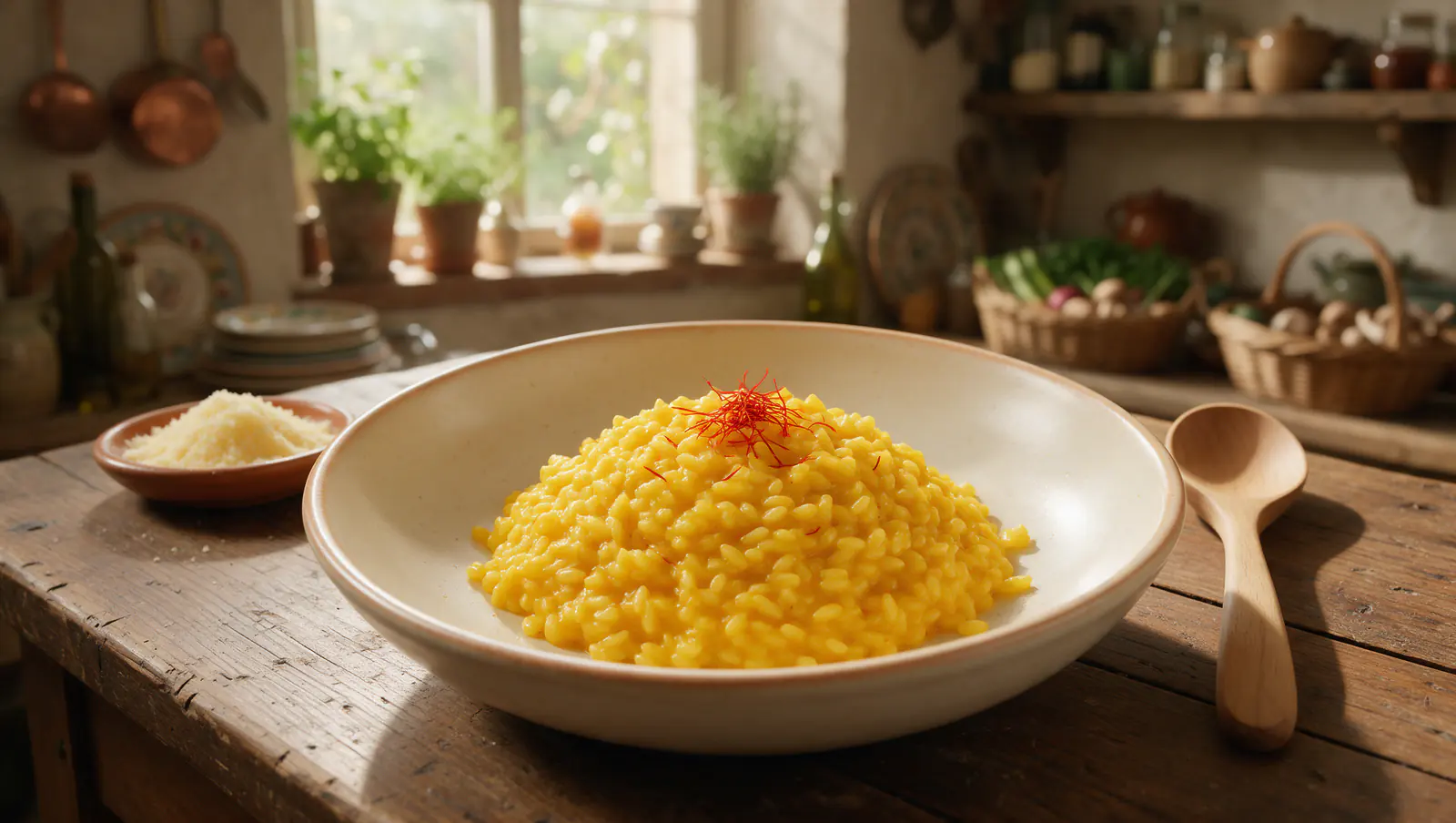
Risotto is a dish of northern Italy. The great rice fields lie in the Po Valley, mostly between Piedmont and Lombardy, with smaller growing areas in Veneto and Emilia-Romagna. That is where risotto lives in everyday cooking, and that is where you will find the strongest opinions about how it should look, how long it should rest and how loose it should be on the plate.
The short version: Milan makes a golden saffron risotto that is fairly compact and often served with ossobuco. Venice and the Veneto cook their risotto looser, "all'onda" (like a wave), and build it around the lagoon and the vegetable garden. Piedmont, home to some of Italy's most important rice country, pairs it with red wine, cheese and, in autumn, truffles.
Below we walk through each style, the rice varieties worth knowing, a reliable method for cooking risotto at home, and where in Italy a class will teach you the local version.
What makes a risotto a risotto
Risotto is not boiled rice with sauce. The method is what defines it: a short-grain, high-starch rice is toasted briefly in fat, then cooked by adding hot broth a little at a time while you stir. The rice releases starch into the liquid, which thickens into a creamy coating around grains that still have some bite at the center.
The finishing step is called mantecatura. Off the heat, you beat in cold butter and grated cheese (usually Parmigiano Reggiano or Grana Padano) until the risotto turns glossy and loose. Most Italian cooks then let it rest for a minute or two, covered, before serving. A good risotto spreads gently when spooned onto a flat plate. If it stands up in a mound, it has gone too far.
Seafood risotto is the usual exception to the cheese rule. Many cooks, especially in Veneto, finish fish risotto with butter or olive oil only, although this is a habit rather than a law.
Risotto alla milanese: saffron, marrow and ossobuco
Risotto alla milanese is the best known risotto in the world, and its color comes from saffron. A popular story links it to the workshops of Milan's cathedral in the sixteenth century, where saffron was supposedly used to tint stained glass. The story is charming but not documented, and food historians treat it as legend. What is clear is that saffron rice has been a Milanese dish for centuries.
The classic version starts with butter and finely chopped onion, and many traditional recipes add a little beef bone marrow, which gives a rich, savory depth. The rice is toasted, splashed with dry white wine, cooked in beef or meat broth, colored with saffron toward the end, and finished with butter and Parmigiano. Milanese risotto tends to be slightly firmer than the Venetian style, though it should still flow.
In Milan it is often served as a piatto unico next to ossobuco, braised veal shank, and that pairing is one of the few times Italians happily put risotto on the same plate as a meat course. If you want to try the combination at home, our slow-cooked osso buco recipe makes a good partner. Leftover saffron risotto is also the base for risotto al salto, a crisp pan-fried rice cake.
Venetian risotto: all'onda and built from the lagoon
In Venice and across the Veneto, risotto is cooked noticeably looser. The phrase you will hear is all'onda: when you shake the pan, the risotto should move like a wave. The Veneto also has its own rice, Vialone Nano, grown around the Verona plain and protected as Vialone Nano Veronese IGP. Its medium grains absorb liquid well and suit the softer, wavier style.
A few Venetian classics worth looking for:
- Risi e bisi: rice and young spring peas, cooked with a broth made from the pea pods. It sits somewhere between a risotto and a thick soup, and Venetians traditionally associate it with spring, around the feast of Saint Mark in late April.
- Risotto al nero di seppia: black risotto made with cuttlefish and its ink. Deeply savory and briny, and found on menus around the lagoon.
- Risotto di gò: made with a broth from small lagoon gobies, a specialty linked to the islands, especially Burano.
- Risotto with radicchio: in winter, red radicchio from Treviso is cooked into risotto, sometimes with a splash of red wine.
Further west, near Verona, rice is cooked with pork in dishes such as risotto all'isolana. If you are basing yourself in the region, our guides to cooking classes in Venice and cooking classes in Verona list hosts who teach these local dishes.
Piedmont, Lombardy and the rest of the rice belt
Piedmont's provinces of Vercelli and Novara hold some of the largest rice fields in Europe, and the region's cooking reflects it. Two closely related dishes, panissa from Vercelli and paniscia from Novara, combine rice with beans, salami and vegetables, and are hearty, rustic and very local. In the Langhe, risotto is cooked with Barolo or other Nebbiolo wine, or finished with Castelmagno cheese. In autumn, shaved white truffle over a simple butter and Parmigiano risotto is one of the region's great seasonal dishes. Our guide to cooking classes in Turin is a good starting point for Piedmontese cooking.
In Lombardy beyond Milan, the Mantua area makes risotto alla pilota, a dry style in which the rice is steamed rather than stirred and topped with crumbled pork sausage. It shows how flexible the word risotto can be once you leave the city. Lombardy's lakes add perch risotto, a dish associated with Lake Como, while Emilia-Romagna and Friuli have their own local versions with mushrooms, squash or herbs.
South of Tuscany, risotto becomes much less common in home cooking. You will still find it on restaurant menus, often with seafood, but rice in the south is more likely to appear in Sicilian arancine (or arancini, depending on which side of the island you ask) or Neapolitan sartù.
Which rice to buy
Most supermarket risotto rice outside Italy is Arborio, which works but can turn soft quickly. If you can find them, these are the varieties Italian cooks reach for:
| Variety | Character | Good for |
|---|---|---|
| Carnaroli | Long grain, firm, holds its bite | Almost any risotto, forgiving for beginners |
| Vialone Nano | Medium grain, absorbs well | Looser Venetian-style risotto, seafood |
| Arborio | Large grain, very starchy | Creamy risotto, but watch the timing |
| Baldo and Sant'Andrea | Less common abroad | Regional dishes, home cooking in Piedmont |
Never rinse risotto rice. The surface starch is what makes the dish creamy.
How to make a good risotto at home
This basic method serves four and works for saffron risotto or as a base for vegetables. Quantities are approximate, because rice absorbs broth at different rates.
- 320 g (about 1 2/3 cups) Carnaroli or Arborio rice
- About 1.2 to 1.5 liters (5 to 6 cups) hot meat, chicken or vegetable broth
- 1 small onion, very finely chopped
- 60 g (4 tablespoons) butter, half of it cold and cubed
- 120 ml (1/2 cup) dry white wine
- 50 g (about 1/2 cup) finely grated Parmigiano Reggiano
- For milanese: a generous pinch of saffron threads (about 0.2 g), soaked in a few tablespoons of hot broth
- Keep the broth at a bare simmer in a separate pot. Cold broth stops the cooking each time you add it.
- Melt half the butter in a wide, heavy pan over medium-low heat and cook the onion gently for 5 to 6 minutes until soft and translucent, not browned.
- Add the rice and stir for 2 to 3 minutes until the grains look slightly translucent at the edges and feel hot to the touch. This is the tostatura.
- Pour in the wine and stir until it has almost evaporated.
- Add broth one or two ladles at a time, stirring often and adding more once the rice has absorbed most of the last addition. Keep it at a lively simmer.
- For milanese, stir in the saffron and its liquid about two thirds of the way through.
- Start tasting at around 15 minutes. Most rice is done in 16 to 18 minutes, tender but with a slight bite in the center. Season with salt, keeping in mind the cheese will add more.
- Take the pan off the heat, add a final splash of broth, then the cold butter and the cheese. Beat vigorously with a wooden spoon for a minute until glossy. Cover and rest for 1 to 2 minutes, then serve on warm, flat plates.
The most common mistakes are cooking over too low a heat, adding all the broth at once, and finishing the cheese on the stove, which can make it stringy.
Where to learn risotto in Italy
Risotto is a natural fit for a northern Italy trip, and it is a good class dish because the technique is easy to see but takes practice to feel. Look for a class that lets each person cook their own pan, not one where the teacher stirs while everyone watches.
For the saffron classic, start with our guide to the best cooking classes in Milan. For a wider view of the region, from the lakes to the Alps and the Veneto, see our roundup of the best cooking classes in northern Italy.
Frequently asked questions
Is risotto eaten as a main course in Italy?
Usually it is a primo, the first course that comes before meat or fish, in the same slot as pasta. Risotto alla milanese with ossobuco is the main exception, and many people eat a generous risotto as a one-dish meal at home.
Can you make risotto ahead for a dinner party?
Restaurants often par-cook risotto: they cook the rice for about two thirds of the time, spread it on a tray to cool quickly, then finish it with hot broth to order. You can do the same at home a few hours ahead, keeping the par-cooked rice refrigerated. Finish and do the mantecatura just before serving.
Do you really have to stir risotto constantly?
No. Regular stirring helps release starch and stops sticking, but you can step away for short periods. What matters more is keeping the pan at a steady simmer and adding hot broth in small amounts.
What wine goes with risotto alla milanese?
A dry, fairly crisp white suits it, and many Lombard cooks also enjoy it with a light red. Use the same dry white in the pot that you plan to drink, or at least one you would be happy to drink.
Is there a vegetarian version of risotto alla milanese?
Yes. Skip the bone marrow and use a good vegetable broth. Check your cheese too: traditional Parmigiano Reggiano is made with animal rennet, so strict vegetarians may want a cheese made with vegetarian rennet.
- Venice
- Milan
- Northern Italy
- Piedmont
- Risotto