
Sicilian street food: arancine, panelle and what to order
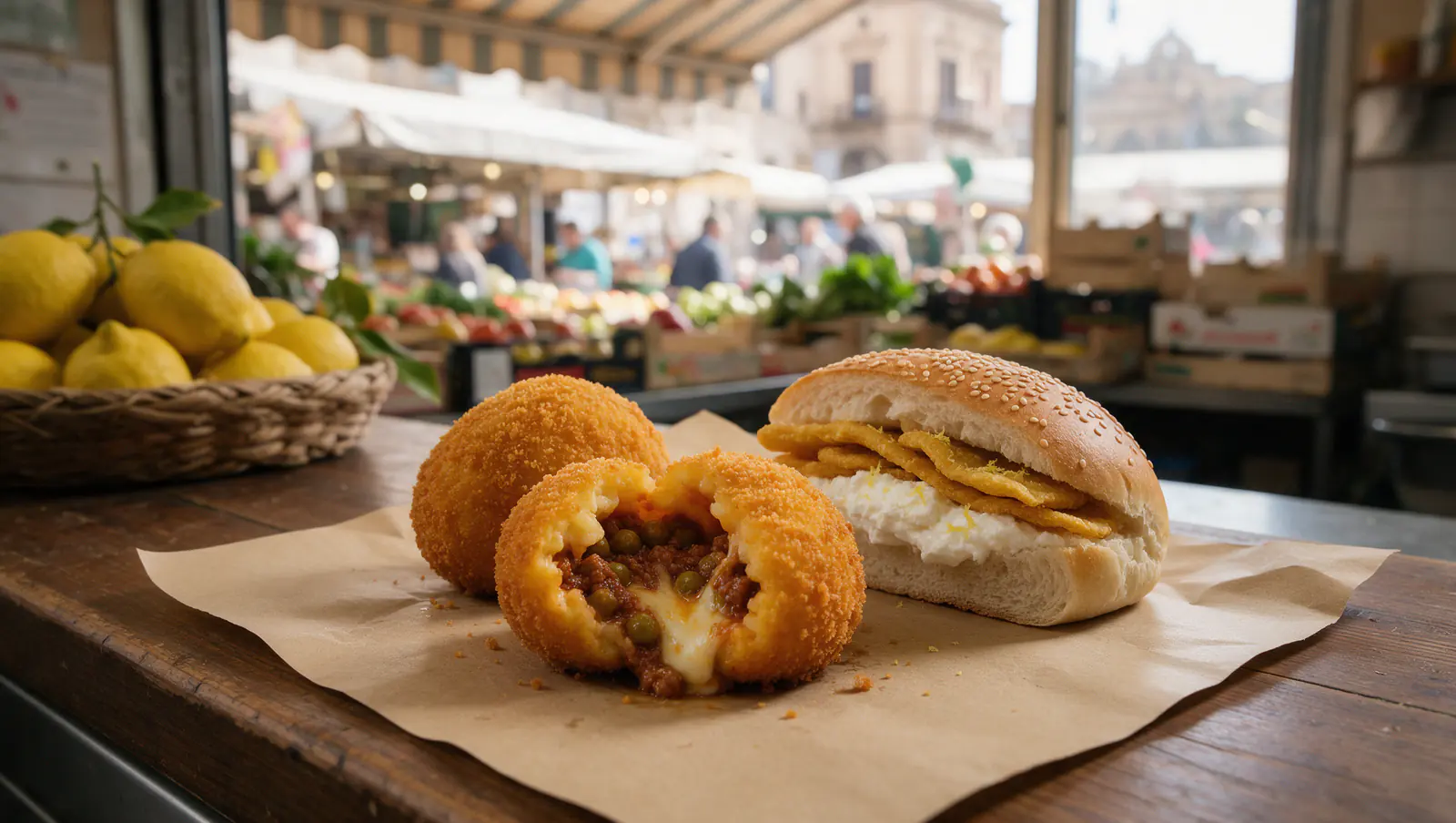
Sicilian street food is cheap, filling and mostly fried, and it is one of the best reasons to visit the island. The short list to order: an arancina (or arancino, depending on where you are), a sandwich of panelle and crocchè, a square of sfincione, and, if you are curious, pani ca' meusa. Finish with a cannolo or, in summer, a granita with brioche.
Palermo is the capital of it all, with market stalls and street vendors serving food from mid-morning until late. Catania, on the east coast, has its own specialties and its own opinions about what the rice balls are called. Below we explain each item, what is inside it, and how to order like a local.
Arancine or arancini: the great rice ball debate
The most famous Sicilian snack is a ball or cone of saffron rice, filled, breaded and deep fried. The name comes from arancia, orange, because the round version looks like a small one.
What to call it is a genuine argument. In Palermo and western Sicily it is usually arancina, feminine, and tends to be round. In Catania and much of the east it is arancino, masculine, and is often shaped into a cone said to recall Mount Etna. The Accademia della Crusca, the authority on the Italian language, has said that both forms are acceptable, which has not settled anything. Use the local word and nobody will mind.
The fillings to know
- Al ragù (or alla carne). Meat ragù with peas and often a little cheese. The classic.
- Al burro. Despite the name, this usually means ham and cheese, often with béchamel. Milder and creamy.
- Spinach, mushroom, pistachio or swordfish. Newer or more regional variations. Pistachio versions are popular around Bronte, the town near Etna known for its pistachios.
In Palermo, 13 December, the feast of Saint Lucy, is the day of the arancina. By tradition many families avoid bread and pasta that day and eat rice and chickpea dishes instead, in memory of a famine said to have ended with the arrival of a ship carrying grain. Expect queues.
Panelle, crocchè and the Palermo sandwich
Panelle are thin fritters made from chickpea flour, water, salt and often parsley. The batter is cooked like polenta, spread thin, cooled, cut into rectangles and fried until golden and soft inside. They are almost always eaten in a soft sesame roll, a combination known as pane e panelle.
The usual companion is crocchè, potato croquettes with a little mint or parsley, sometimes called cazzilli in Palermo dialect. Ask for a sandwich with both and a squeeze of lemon. It is a breakfast or mid-morning snack for many people in Palermo, which tells you a lot about the city.
If you want to try panelle at home, this ratio works: 250 g (about 2 cups) of chickpea flour whisked into 750 ml (about 3 cups) of cold water with a teaspoon of salt. Cook over medium heat, stirring constantly, for about 10 to 15 minutes until very thick, add chopped parsley, then spread about 5 mm (a scant quarter inch) thick on an oiled tray. Cool completely, cut, and fry in hot oil until golden on both sides.
Sfincione, pani ca' meusa and the braver choices
- Sfincione. Palermo's thick, spongy pizza, topped with tomato, a lot of soft onion, anchovies, a crumbly cheese such as caciocavallo, oregano and toasted breadcrumbs. Vendors sell it in squares from carts and small vans. It is closer to a focaccia than to a Neapolitan pizza, a difference we explain in focaccia vs pizza.
- Pani ca' meusa. A sesame roll filled with thin slices of veal spleen and lung, cooked slowly in lard. Order it schietta (plain, with lemon) or maritata (married, with ricotta or caciocavallo). It is rich and iron-tasting, and locals treat it as a point of pride.
- Stigghiola. Lamb or goat intestines wrapped around a skewer or a spring onion and grilled over coals, seasoned with salt and lemon. You will usually smell the smoke before you see the grill.
- Polpo bollito. Boiled octopus, sliced and dressed with lemon, sold from stalls near the sea and in the markets.
Palermo's historic markets, such as Ballarò, the Capo and the Vucciria, are the obvious places to try these. Ballarò and the Capo are working food markets in the morning, while the Vucciria is better known today for its evening atmosphere.
Eastern Sicily: Catania, Syracuse and Ragusa
The east of the island has its own street food, and it is worth knowing the names before you arrive.
- Arancini in cone shape, as described above, often larger than in Palermo.
- Cipolline. Puff pastry parcels filled with onion, tomato, ham and cheese, a Catania bar staple.
- Scacce. Folded, layered flatbreads from the Ragusa area, filled with tomato and cheese, ricotta and onion, or vegetables such as eggplant.
- Horse meat. Grilled horse meat cutlets and patties are a Catania tradition, usually cooked in the evening on street grills.
- Seafood from the market. Catania's fish market, near the cathedral, is a morning spectacle, and stalls around it fry or grill some of the catch.
If you are staying in Taormina, which has a lot of tourist-focused dining, our guide on how to eat like a local in Taormina covers what to look for and what to skip.
Sweets: cannoli, granita and brioche
Cannoli are fried pastry tubes filled with sweetened sheep's milk ricotta, sometimes with candied orange, chocolate chips or chopped pistachio at the ends. The rule worth following: buy them filled to order. A shell filled hours earlier goes soft.
Granita is a semi-frozen ice made with sugar and fruit, almonds, pistachios, coffee or lemon. In eastern Sicily, especially around Catania and Messina, the traditional summer breakfast is a granita with a warm, soft brioche, often with whipped cream on top of a coffee granita. The texture is finer and creamier than the shaved ice many visitors expect. It is a summer custom, and fewer places make it in winter.
You will also see iris, a fried or baked brioche filled with ricotta and chocolate chips, and cassatelle and other ricotta pastries that vary from town to town.
How to order Sicilian street food
- Go early for fried food. Panelle and arancine are at their best fresh from the oil. Mid-morning and early evening are when turnover is high.
- Stand where the locals stand. A crowd of workers at a counter is a better guide than any sign.
- Keep cash handy. Small stalls and carts may not take cards. Street food is inexpensive: expect roughly a few euros per item, though prices vary by city and setting.
- Share and graze. Arancine are large and filling. A plan that works is one rice ball, one sandwich and a sweet, shared between two people.
- Pair it with local wine. In the evening, a glass of Nero d'Avola or a white from the slopes of Etna goes well with fried food.
Learn Sicilian cooking
Many Sicilian cooking classes start with a market walk and end with a lunch that includes arancine or panelle, which is a good way to understand the techniques and the ingredients together. Our guide to the top Palermo cooking classes is the place to start for street food, and the best cooking classes in Sicily covers the whole island, from Catania to the west coast.
If you are based in the southeast, see our list of cooking classes in Syracuse.
Frequently asked questions
Is Sicilian street food safe to eat?
Generally yes. Fried food made to order at busy stalls is a safe choice because it is cooked hot and sold quickly. As anywhere, avoid items that look like they have been sitting out for hours, especially in summer heat.
Is there vegetarian Sicilian street food?
Plenty. Panelle and crocchè are meat-free, sfincione usually contains anchovies but can sometimes be found without, and arancine come in spinach, mushroom or cheese versions. Ask about the filling, since ragù is the default.
Can I find good arancine outside Sicily?
Yes, in Sicilian bakeries and some Italian delis abroad, but they are often made in advance and reheated. They are rarely as good as one fried to order. Making them at home is a good project once you have a firm, cooled saffron risotto.
What is the best time of day for street food in Palermo?
Mid-morning for panelle, sfincione and market snacks, and early evening for grilled stigghiola and a glass of wine. Many stalls close in the afternoon and on Sundays, so check before you set out.
- Sicily
- Palermo
- Food guide
- Travel
- Street food