
A Tuscan food guide: the dishes worth traveling for
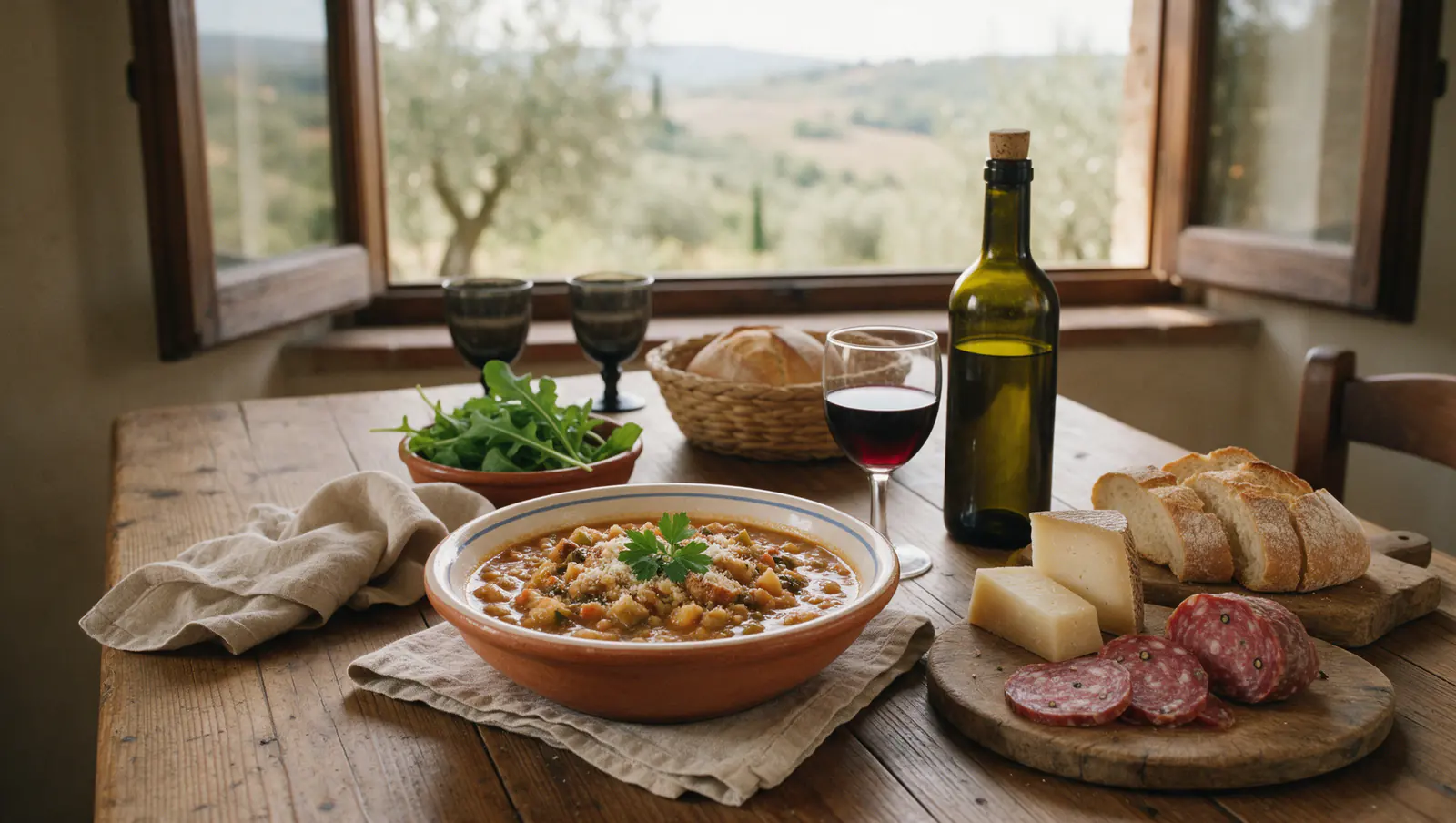
Tuscan food is simple in the best sense: good bread, good olive oil, beans, vegetables, grilled meat and wine, cooked without fuss. The dishes worth traveling for are bistecca alla fiorentina, ribollita and pappa al pomodoro, hand-rolled pici, pappardelle with wild boar, Florence's lampredotto sandwich and the cured meats and pecorino of the countryside. In autumn, add new olive oil and truffles.
Much of it comes from cucina povera, the thrifty cooking of farm families who wasted nothing, especially stale bread. That is why so many classic dishes are built on bread and beans. Below we go through what to order, where it is most at home, and when in the year it is at its best.
The bread and bean dishes
Tuscan bread is traditionally made without salt, which surprises nearly everyone at first. It makes sense next to salty cured meats and cheese, and it dries out rather than going moldy, which is exactly what the following dishes need.
- Ribollita. A thick soup of cannellini beans, cavolo nero (lacinato kale), other vegetables and stale bread. The name means reboiled, because it was traditionally made one day and reheated the next, when it is thicker and better. Mostly a cold-weather dish, at its best once cavolo nero has had a frost.
- Pappa al pomodoro. Bread cooked down with ripe tomatoes, garlic, basil and plenty of olive oil until it becomes a soft porridge. Eaten warm or at room temperature, mostly in summer.
- Panzanella. A summer salad of soaked and squeezed stale bread with tomatoes, red onion, cucumber and basil, dressed with oil and vinegar.
- Fagioli all'uccelletto. Cannellini beans stewed with tomato, garlic and sage, often served next to sausages.
- Fettunta. Toasted bread rubbed with garlic and soaked in olive oil. In late autumn, when the new oil is pressed, this is the best way to taste it.
Bistecca alla fiorentina and the meat course
The famous Florentine steak is a thick T-bone or porterhouse cut, usually at least two fingers thick and often around 1 to 1.5 kg (about 2 to 3 pounds). It is grilled over hot coals, seasoned with salt and often a little olive oil, and served rare in the middle. Chianina, the large white cattle of the Valdichiana, is the traditional breed, though restaurants use other breeds too. Steaks are often priced by weight, so check the menu before ordering.
Most kitchens will not cook it beyond medium rare, and asking for well done is not a good idea. If you want to try it at home, our Fiorentina steak recipe explains the method.
Other meat dishes worth ordering:
- Peposo. Beef slow-cooked with red wine, garlic and a lot of black pepper, traditionally linked to Impruneta, the town south of Florence known for terracotta.
- Arista. Roast pork loin with garlic, rosemary and fennel.
- Cinghiale in umido. Wild boar stewed with red wine and herbs, common in the hills of Chianti and the Maremma.
Florence: lampredotto and crostini
Florence has its own short list. Lampredotto is the fourth stomach of the cow, simmered for hours in broth with vegetables and herbs, then chopped and served in a roll with green sauce and spicy oil. The top half of the roll is often dipped in the broth. It is sold from street carts and is the city's classic quick lunch. Tripe in tomato sauce, trippa alla fiorentina, is its sit-down cousin.
Crostini toscani, also called crostini neri, are slices of bread topped with a chicken liver pâté made with capers, anchovy and vin santo or another wine. They are the standard start to a Tuscan meal.
For more on markets, timing and ordering in the city, read how to eat like a local in Florence.
Pasta in the Tuscan countryside
Tuscany is less of a fresh pasta region than Emilia-Romagna, but it has a few pastas you should not miss.
- Pici. Thick, hand-rolled strands of flour and water, sometimes with a little egg, associated with southern Tuscany around Siena, Montepulciano and the Val d'Orcia. Classic sauces include all'aglione (tomato with a mild, large-cloved local garlic), cacio e pepe, and con le briciole (with fried breadcrumbs).
- Pappardelle al cinghiale. Wide egg ribbons with wild boar ragù. Hare ragù, alla lepre, is another traditional version.
- Tortelli di patate. Potato-filled pasta from the Mugello, north of Florence, usually served with a meat sauce or butter.
- Testaroli. From the Lunigiana in the far north, a pancake-like pasta cooked on a hot griddle, cut into pieces and dressed with pesto.
Cheese, cured meats, oil and truffles
- Pecorino. Sheep's milk cheese is the Tuscan cheese. Pecorino Toscano DOP is made across the region, and the town of Pienza is especially known for it. Young pecorino is soft and mild, while aged versions are firm and nutty.
- Finocchiona IGP. A soft salami flavored with fennel seed, and the most Tuscan of the cured meats.
- Prosciutto Toscano DOP and lardo di Colonnata IGP. The prosciutto is saltier than Parma ham, which suits the unsalted bread. Lardo is pork fat cured with herbs in marble basins in the Apuan Alps, sliced paper thin.
- Olive oil. The harvest usually runs from about mid-October to December. New oil is bright green, peppery and slightly bitter, and many farms offer tastings. See our guide to olive oil tours in Tuscany.
- Truffles. The area around San Miniato, between Florence and Pisa, is known for white truffles, usually in season from around October to December. Black truffles appear at other times of year.
Sweets, wine and where to go
Tuscan desserts are mostly simple and dry. Cantucci, hard almond biscuits from the Prato area, are dipped in vin santo, the sweet dessert wine made from dried grapes. Siena is known for panforte, a dense cake of honey, nuts, candied fruit and spice, and ricciarelli, soft almond cookies. In autumn, look for castagnaccio, a flat chestnut flour cake with rosemary and pine nuts, and schiacciata all'uva, a flatbread baked with wine grapes during the harvest.
The wines are central to the meal: Chianti Classico between Florence and Siena, Brunello di Montalcino and Vino Nobile di Montepulciano in the south, and Vernaccia di San Gimignano for white.
A rough guide to where each region shines:
| Area | What to look for |
|---|---|
| Florence | Lampredotto, bistecca, crostini, trippa |
| Chianti | Wild boar, olive oil, Chianti Classico |
| Siena and Val d'Orcia | Pici, pecorino, panforte, Brunello |
| Coast and Maremma | Cacciucco fish stew in Livorno, wild boar inland |
Cook it in Tuscany
Tuscan food is easy to learn because it depends on ingredients more than technique, and a class in a farmhouse kitchen shows you how much a good oil or a ripe tomato changes a dish. Our guide to the best cooking classes in Tuscany covers the whole region, and the best cooking classes in Florence is the place to start if you are staying in the city. For a longer stay, see our pick of Tuscany cooking vacations.
Frequently asked questions
Why is Tuscan bread unsalted?
Nobody knows for certain. A popular story blames a historic salt tax, but that is debated. What is clear is that the habit has lasted because unsalted bread suits salty cured meats and cheese, and it dries well for soups like ribollita.
How much bistecca alla fiorentina should two people order?
A steak of around 1 kg (about 2 pounds) including the bone is usually enough for two with a side dish. Many restaurants have a minimum weight, so ask, and remember that a good part of the weight is bone.
When is the best season to visit Tuscany for food?
Autumn is hard to beat, with the grape harvest, new olive oil, chestnuts, mushrooms and truffles, roughly from September to December. Summer is better for tomatoes, panzanella and pappa al pomodoro, but it can be very hot inland.
Is Tuscany easy for gluten-free travelers?
It takes some planning, since so many dishes are built on bread and pasta. Grilled meat, beans, many vegetable dishes and cheese are naturally gluten-free, and awareness of celiac disease is high in Italy. Some cooking classes in the region also run dedicated gluten-free sessions, so ask when you book.
- Tuscany
- Florence
- Olive oil
- Food guide
- Travel