
What to eat in Bologna, beyond spaghetti bolognese
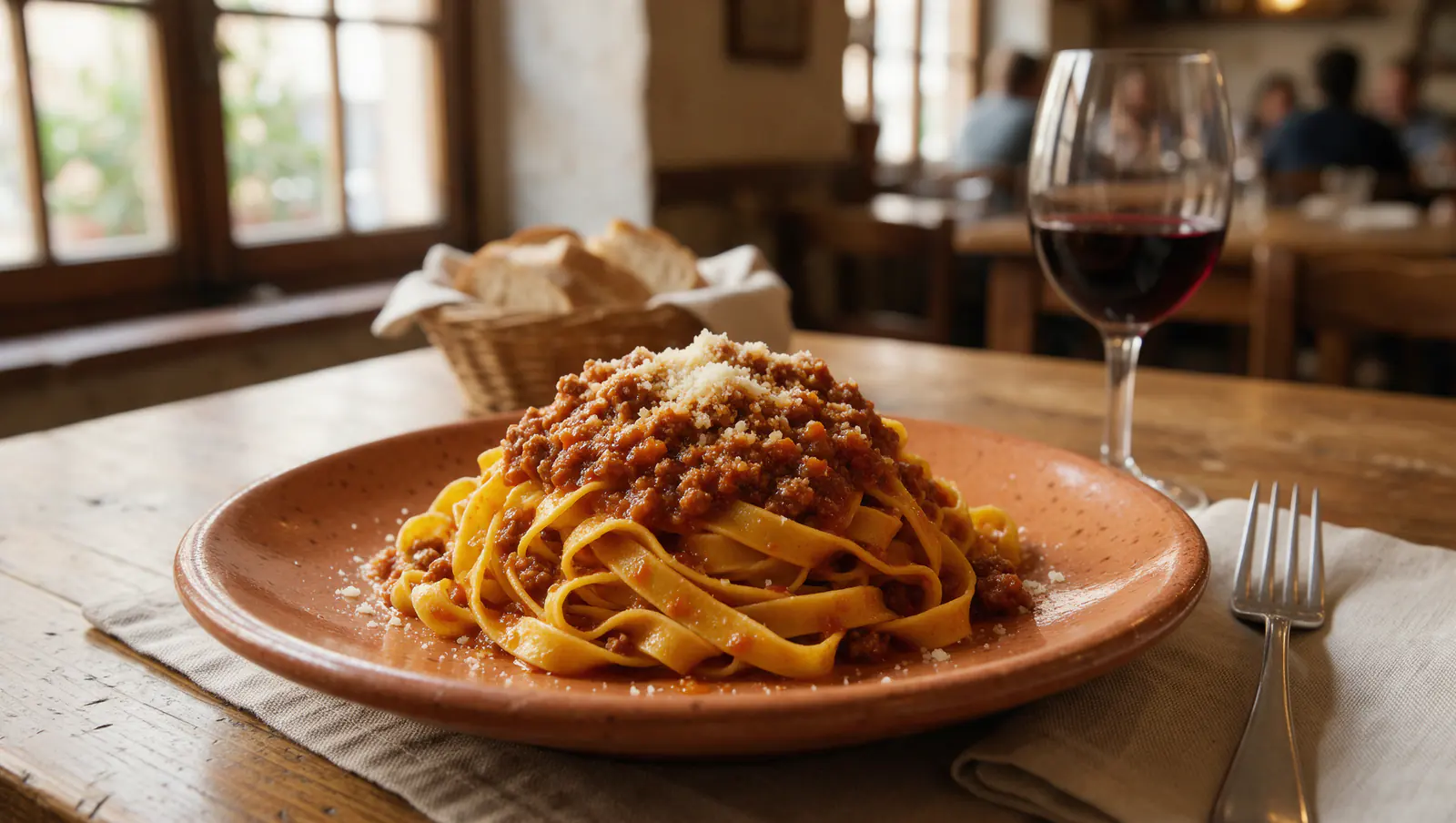
Bologna has a reputation as Italy's most serious food city, and it earns it. But the dish most visitors arrive asking for, spaghetti bolognese, is the one you will have the hardest time finding. In Bologna, meat ragù goes on fresh egg tagliatelle, inside lasagne, or nowhere at all.
So what should you actually eat? Start with tagliatelle al ragù, tortellini in brodo and lasagne verde. Add mortadella, Parmigiano Reggiano and fried dough from the wider Emilia region, and leave room for a plate of tortelloni with butter and sage. This guide walks through each one, what it should look like on the plate, and how to order it.
The common thread is sfoglia, the thin sheet of egg pasta rolled by hand. Bologna is the capital of fresh egg pasta, and once you understand that, the menu makes sense.
Why there is no spaghetti bolognese in Bologna
Bolognese ragù is a slow-cooked meat sauce: minced beef and often pork, a soffritto of onion, carrot and celery, a little tomato, wine and milk, simmered for hours until it is thick and glossy. It is much more about meat than tomato, which surprises people who know the red, saucy version served abroad.
A sauce this rich clings best to a wide, porous ribbon, which is why locals pair it with tagliatelle made from egg and soft wheat flour. Thin, slippery dried spaghetti lets it slide off. In 1982 the Accademia Italiana della Cucina deposited a reference recipe for ragù with the Bologna Chamber of Commerce, and it calls for tagliatelle, not spaghetti. How spaghetti bolognese became the international version is debated, but it is generally traced to emigrant cooking and restaurants outside Italy.
None of this means the dish abroad is bad. It is simply a different dish. If you want the Bologna original, order tagliatelle al ragù and expect a modest portion of pasta with just enough sauce to coat it, finished with grated Parmigiano Reggiano.
The fresh pasta to order
Bologna's pasta menu is short and specific. These are the plates worth ordering at least once.
Tortellini in brodo
Tiny folded pasta filled with pork loin, prosciutto, mortadella, Parmigiano Reggiano and nutmeg, served floating in a clear meat broth, usually from capon or beef. This is the dish families make for Christmas, and the folding is slow, skilled work. Bologna and Modena both claim tortellini, and the argument is part of the local entertainment. Purists will tell you that tortellini belong in broth, and that tortellini with cream is a later invention.
Tortelloni
Larger than tortellini and filled with ricotta and greens or herbs, often parsley or spinach. They are usually dressed simply with melted butter and sage, or with a light tomato sauce. A good choice if you want fresh pasta without meat.
Lasagne verde alla bolognese
In Bologna, lasagne are made with green sheets, colored with spinach worked into the egg dough, layered with ragù, béchamel and Parmigiano Reggiano. There is no ricotta and no mozzarella. The result is lighter than many people expect, with many thin layers rather than a few thick ones. If you want to try it at home, our classic lasagna Bolognese recipe follows this structure.
Passatelli and gramigna
Passatelli are thick strands made from breadcrumbs, eggs and Parmigiano Reggiano, pressed through a tool with holes and cooked in broth. They are more strongly associated with Romagna, to the east, but appear on Bologna menus in colder months. Gramigna is a short, curled pasta often served with a sausage sauce, a homely dish locals are fond of.
Mortadella, Parmigiano and the cured meat board
Bologna sits in the middle of Emilia-Romagna, a region that produces some of Italy's best-known protected foods. A board of cured meats and cheese, called a tagliere, with a glass of wine is one of the best ways to eat in the city.
- Mortadella Bologna IGP. The large, pale pink pork sausage dotted with cubes of fat and sometimes pistachios. It is the ancestor of what Americans call baloney, but it tastes nothing like it. Ask for it sliced very thin.
- Parmigiano Reggiano DOP. Made in a defined area that includes the provinces of Parma, Reggio Emilia, Modena and parts of Bologna and Mantua. You will often see the age listed: 24 months is the classic eating age, while 30 months and older is drier and more crystalline.
- Prosciutto di Parma DOP and culatello. Parma is about an hour away by train, and its hams are on every board. Culatello, the prized cut from the rear of the leg, comes from the lowlands near the Po river.
- Aceto Balsamico Tradizionale di Modena DOP. The traditional aged balsamic, used a few drops at a time, often over chunks of Parmigiano. It is a different product from the everyday balsamic vinegar sold in supermarkets.
Many of these foods are best seen where they are made. Day trips to dairies and producers are easy from Bologna, and our guides to cooking classes in Modena and cooking classes in Parma cover classes that combine both.
Fried dough, flatbreads and second courses
Pasta gets the attention, but some of the most satisfying things in Bologna are simpler.
- Crescentine fritte. Puffy squares of fried dough served warm with cured meats and soft cheese. In Modena the same thing is called gnocco fritto. Expect to argue about the name if you mention it to locals from either city.
- Tigelle. Small round flatbreads cooked in a hot mold, split open and filled. They come from the Modena hills, but are easy to find in Bologna.
- Cotoletta alla bolognese. A veal cutlet, breaded and fried, then topped with prosciutto and Parmigiano Reggiano and finished in a little broth until the cheese melts. Rich and very local.
- Bollito misto. Mixed boiled meats served with green sauce and mostarda, a winter dish common across Emilia.
- Friggione. A slow-cooked side dish of onions and tomatoes, simple and sweet.
Sweets and what to drink
Bologna is not a city of elaborate pastries, but a few sweets are worth looking for.
- Torta di riso. A firm rice cake set with eggs and almonds and often soaked in a little liqueur, traditionally cut into diamonds.
- Zuppa inglese. A layered dessert of liqueur-soaked sponge with yellow and chocolate custard, found across Emilia-Romagna.
- Certosino. A dense Christmas cake with honey, candied fruit, nuts and spices, seen mostly around the winter holidays.
To drink, the local reds are lightly sparkling. Lambrusco, from the Modena and Reggio Emilia areas, is served cool with cured meats and fried dough, and the good ones are dry and not sweet. Pignoletto, a white that can be still or sparkling, comes from the hills south of Bologna. Sangiovese from Romagna is the usual still red.
How to eat well in Bologna
A few practical habits make a big difference.
- Eat pasta at lunch. Many locals still treat lunch as the main meal, and fresh pasta is often made in the morning. Lunch is also usually cheaper than dinner.
- Look for the short menu. A handwritten list of a few pastas that changes with the season is generally a better sign than a long laminated one with photos.
- Visit the markets. The old streets around the Quadrilatero, near Piazza Maggiore, are lined with food stalls and delis, and the Mercato delle Erbe is a covered market where locals shop.
- Go for one pasta, not three. Portions are sized for a meal with several courses. Sharing a tagliere and ordering one pasta each is a sensible plan.
- Mind the season. Tortellini in brodo is a cold-weather dish, while summer menus lean on lighter fillings and vegetables.
Learn to make it yourself
The best way to understand Bologna's food is to roll a sheet of sfoglia with a rolling pin and fold a tray of tortellini. It is harder than it looks, and seeing it done by someone who learned at home is the fastest way to improve. Our guide to the top cooking classes in Bologna compares the city's options, from short pasta workshops to market tours with a meal.
If you are traveling beyond Bologna, the best pasta making classes in Italy covers other regions, and if you are at home, a béchamel is the step most people get wrong in lasagne, so our béchamel recipe for lasagne is a good place to start.
Frequently asked questions
Is it rude to ask for spaghetti bolognese in Bologna?
Not rude, but you are unlikely to find it on a traditional menu. Some places aimed at tourists offer it. If you ask for tagliatelle al ragù instead, you will get the local version of the same idea.
How many days do I need to eat my way through Bologna?
Two or three days lets you try the main pastas, a market and a cured meat board without rushing. Add a day if you want to visit a Parmigiano Reggiano dairy or a balsamic producer near Modena.
Is Bologna good for vegetarians?
Better than its reputation suggests. Tortelloni with ricotta and herbs, vegetable side dishes, Parmigiano Reggiano and fried crescentine are all meat-free. Be aware that tortellini filling and many broths contain meat, so ask before ordering.
Can I bring mortadella or Parmigiano Reggiano home?
It depends on where home is. Hard cheeses are often allowed into many countries, while meat products are restricted in the United States, Australia and elsewhere. Check your own country's customs rules before you buy, and ask for vacuum packing.
When is the best time of year to visit Bologna for food?
Autumn and winter are when the heartiest dishes, such as tortellini in brodo and bollito misto, are at their best. Spring and early autumn are more comfortable for walking. Summer can be hot, and some family-run places close for a week or two around mid-August.
- Bologna
- pasta
- Food guide
- Emilia-romagna
- Travel