
What to eat in Puglia: orecchiette, burrata and the cucina povera
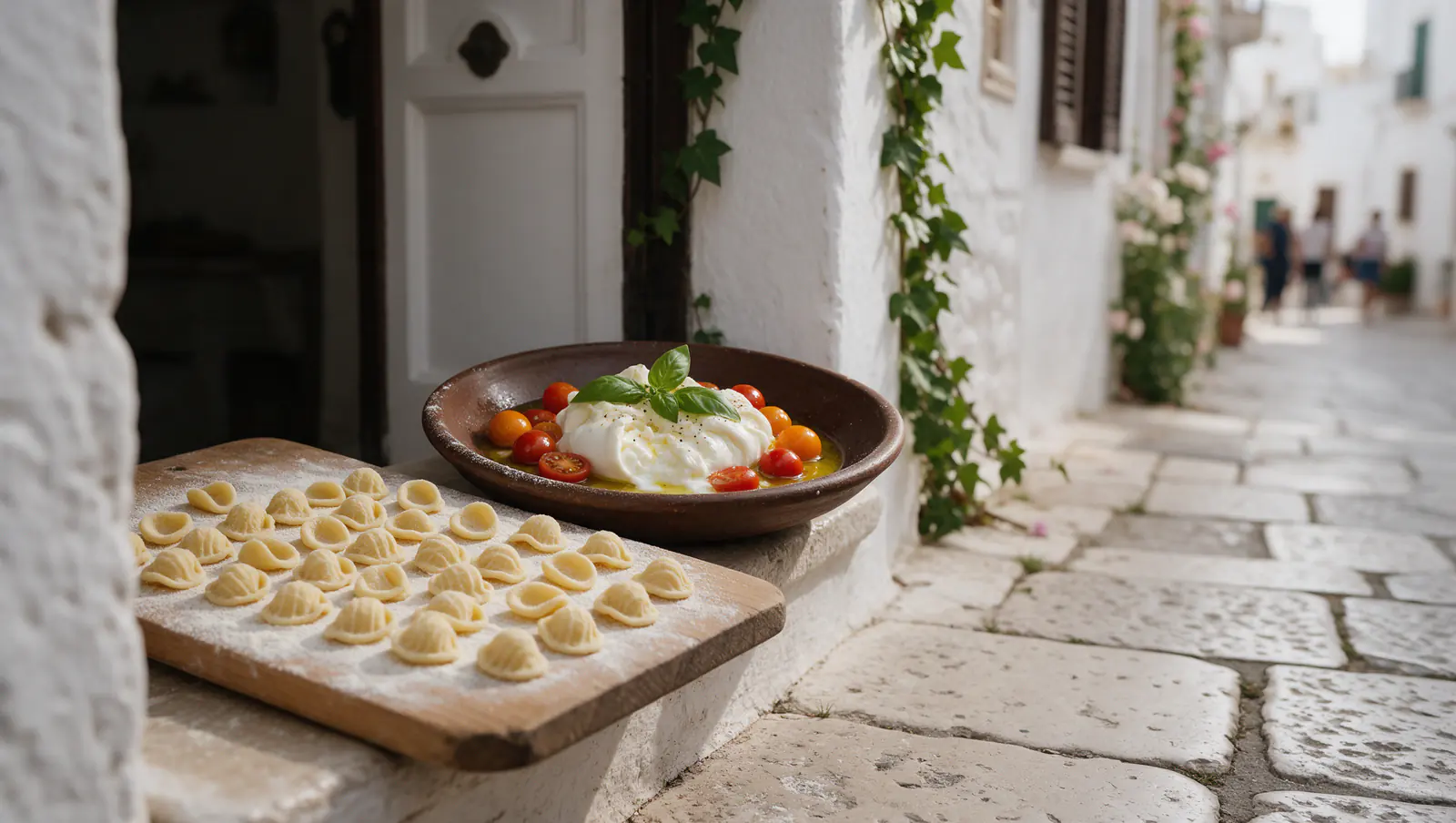
Puglia, the heel of Italy's boot, eats from the land and the sea with very little fuss. The essentials: orecchiette with cime di rapa, fresh burrata and stracciatella, focaccia barese, fava bean purée with wild chicory, raw seafood in Bari, panzerotti, and the pastries of Lecce. Almost everything is cooked with the region's olive oil, and much of it is built on durum wheat, vegetables and legumes.
This is cucina povera, the cooking of poor rural households, and it is the key to understanding the region. Meat was a luxury, so vegetables, bread and pasta made from flour and water did the work. The result is food that is light, seasonal and very satisfying. Here is what to order and how to make sense of a Pugliese menu.
Orecchiette and the pasta of Puglia
Orecchiette, little ears, are the symbol of Puglian cooking. They are made from durum wheat semolina and water, with no egg. Each piece is dragged across a wooden board with a knife and turned over the thumb, which gives it a rough outside and a thin, cupped center that catches sauce.
The classic dish is orecchiette con le cime di rapa, with turnip greens (broccoli rabe in the US), garlic, chili and anchovy, sometimes topped with toasted breadcrumbs. The greens are at their best in the cooler months, roughly from late autumn to early spring. On Sundays in Bari, orecchiette are often served with a tomato sauce in which braciole, rolls of meat filled with cheese and herbs, have been slowly cooked.
In the old town of Bari, women making orecchiette at tables outside their front doors has become one of the city's most photographed sights. Other pastas to look for:
- Cavatelli. Short, curled semolina pasta, often served with vegetables, mussels or beans.
- Sagne 'ncannulate. Long twisted ribbons from the Salento, usually with tomato sauce and ricotta forte or cacioricotta.
- Ciceri e tria. A Salento dish of pasta and chickpeas in which part of the pasta is fried until crisp, then mixed back in.
Making orecchiette at home
Mix 400 g (about 2 1/3 cups) of finely milled durum wheat semolina, labeled semola rimacinata, with about 200 ml (a generous 3/4 cup) of lukewarm water and a pinch of salt. Knead for around 10 minutes until smooth and firm, adding water a spoonful at a time if the dough cracks. Rest it covered for 30 minutes, roll it into ropes about 1 cm (a little under half an inch) thick, cut small pieces and drag each one toward you with a blunt knife, then flip it over your thumb. Cook in salted boiling water for about 3 to 5 minutes when fresh, longer once dried. This serves four.
Burrata, stracciatella and the dairy
Burrata is a pouch of fresh pasta filata cheese, the same stretched curd used for mozzarella, filled with stracciatella: shreds of curd soaked in cream. It is usually traced to the area around Andria, in the north of the region, in the early twentieth century, and Burrata di Andria is now a protected IGP product.
The rule is to eat it as fresh as possible, ideally the day it is made, at room temperature, with good bread, tomatoes or a drizzle of olive oil. Burrata loses much of its charm after a day or two in the fridge, which is why it tastes so different in Puglia than abroad.
Other cheeses worth knowing:
- Mozzarella and nodini. Fresh cow's milk mozzarella, often tied into small knots.
- Caciocavallo. A stretched-curd cheese shaped like a gourd and aged, mild when young and sharper with time.
- Ricotta forte. A fermented, pungent spreadable ricotta used in small amounts, especially in the Salento.
Bread, focaccia and things to eat with your hands
- Pane di Altamura DOP. A large, golden durum wheat loaf with a thick crust and yellow crumb, from the town of Altamura near Matera.
- Focaccia barese. Thick, oily focaccia from Bari, often made with some boiled potato in the dough and topped with cherry tomatoes, olives and oregano. Crisp at the bottom and soft inside.
- Panzerotti. Half-moon pockets of dough filled with tomato and mozzarella and deep fried, a common evening snack.
- Friselle. Hard, twice-baked rings of bread, briefly dipped in water and topped with chopped tomato, salt, oregano and olive oil. A summer staple.
- Taralli. Crunchy rings of dough boiled then baked, often flavored with fennel seed or chili, served with wine.
- Rustico leccese. A round puff pastry filled with béchamel, mozzarella and tomato, sold in bars in Lecce.
Vegetables, legumes and the seafood
The most typical plate of cucina povera is fave e cicoria: a smooth purée of dried fava beans, cooked with a little potato and served next to boiled wild chicory, all dressed with raw olive oil. It sounds plain and tastes wonderful. Look also for grilled and preserved vegetables, lampascioni (the bitter bulbs of a wild hyacinth, pickled or fried), and dishes of chickpeas and lentils.
Puglia has a long coastline, and seafood is everywhere. In Bari, eating raw seafood is a local habit: sea urchins, mussels, small clams and baby octopus, sold at the harbor and eaten with lemon. If you choose to try it, eat it only where it is clearly fresh and busy, since raw shellfish carries real risk. Cooked options include tiella barese, a baked dish of rice, potatoes and mussels, and cozze ripiene, stuffed mussels in tomato sauce.
The few meat dishes reflect what was available. In the Valle d'Itria, around Martina Franca and Cisternino, look for bombette, small rolls of pork filled with cheese and grilled, and for butcher shops that grill meat to order in the evening.
Olive oil, wine and sweets
Puglia is Italy's largest olive oil producing region, and its ancient olive groves are part of the landscape. The local oil, much of it from the Coratina and Ogliarola varieties, ranges from mild to intensely green and peppery. The harvest usually runs from about October to December.
The main red grapes are Primitivo, grown around Manduria and Gioia del Colle, and Negroamaro, the grape of the Salento, which is also used for many rosatos. Our guides to wine tasting in Puglia and Salento wine tours cover where to taste them.
For something sweet, Lecce's pasticciotto is an oval shortcrust pastry filled with custard, eaten warm at breakfast. At Christmas you will see cartellate, fried ribbons of dough soaked in vincotto or honey.
Learn to cook in Puglia
Shaping orecchiette is hard to learn from a written description and easy to learn sitting next to someone who has done it for decades. Most classes in the region include it, along with a few vegetable dishes and a long lunch. Our guide to cooking classes in Puglia compares the options across the region, and if you are staying in the Salento, see the best cooking classes in Lecce. For the wider south, read our pick of the best cooking classes in southern Italy.
Frequently asked questions
What is the difference between burrata and mozzarella?
Mozzarella is a solid ball of stretched curd. Burrata uses a similar curd as an outer shell but is filled with stracciatella, a soft mix of curd shreds and cream, so it is richer and runnier inside.
Where can I buy semola rimacinata outside Italy?
Italian delis and many large supermarkets sell it, sometimes labeled durum wheat semolina, remilled or extra fine. Coarse semolina used for couscous or puddings will not give the same smooth dough.
Is Puglia a good region for vegetarians?
Very good. The cucina povera tradition means many dishes are based on vegetables, legumes, bread and cheese. Orecchiette with cime di rapa often includes anchovy, so ask for it without if you do not eat fish.
What is the best time of year to visit Puglia for food?
Late spring and early autumn are comfortable and full of produce. Summer is the season for tomatoes, friselle and seafood, but beaches and towns are busy, especially in August. Autumn brings the olive harvest and new oil.
- pasta
- Puglia
- Food guide
- Travel
- Cheese