What to expect at your first pasta-making class
A pasta-making class is one of the most popular cooking experiences in Italy, and one of the easiest to enjoy as a beginner. You do not need any experience. Most classes start with flour and eggs on a wooden board and end, two to four hours later, with you eating what you made.
In a typical class you will make one or two doughs (usually egg pasta, sometimes a semolina and water dough too), roll them by hand or with a machine, cut or shape several pasta types, and cook them with simple sauces. The rest of this guide walks through each step so you know what is coming and how to get the most out of it.
How a typical class is structured
Formats vary, but most classes follow a similar rhythm:
- Welcome and introduction. Often with coffee or a glass of something, and a short talk about the region's pasta traditions.
- Making the dough. Everyone builds their own flour well and mixes their dough. This is usually the part people remember most.
- Resting time. The dough needs to rest, so many classes use this gap to make a sauce, a filling or a dessert such as tiramisu.
- Rolling and shaping. The longest and most hands-on part.
- Cooking and eating. The instructor usually cooks the pasta while you sit down, often with wine.
Expect roughly a third of the time to be spent eating. That is part of the point: tasting your own pasta next to the instructor's is how you learn what the texture should be.
The dough: flour, eggs and patience
The classic egg pasta of central and northern Italy is simple: roughly 100 grams of flour (about 3/4 cup) to one large egg per person. The flour is usually soft wheat "00", sometimes mixed with durum wheat semolina for more bite.
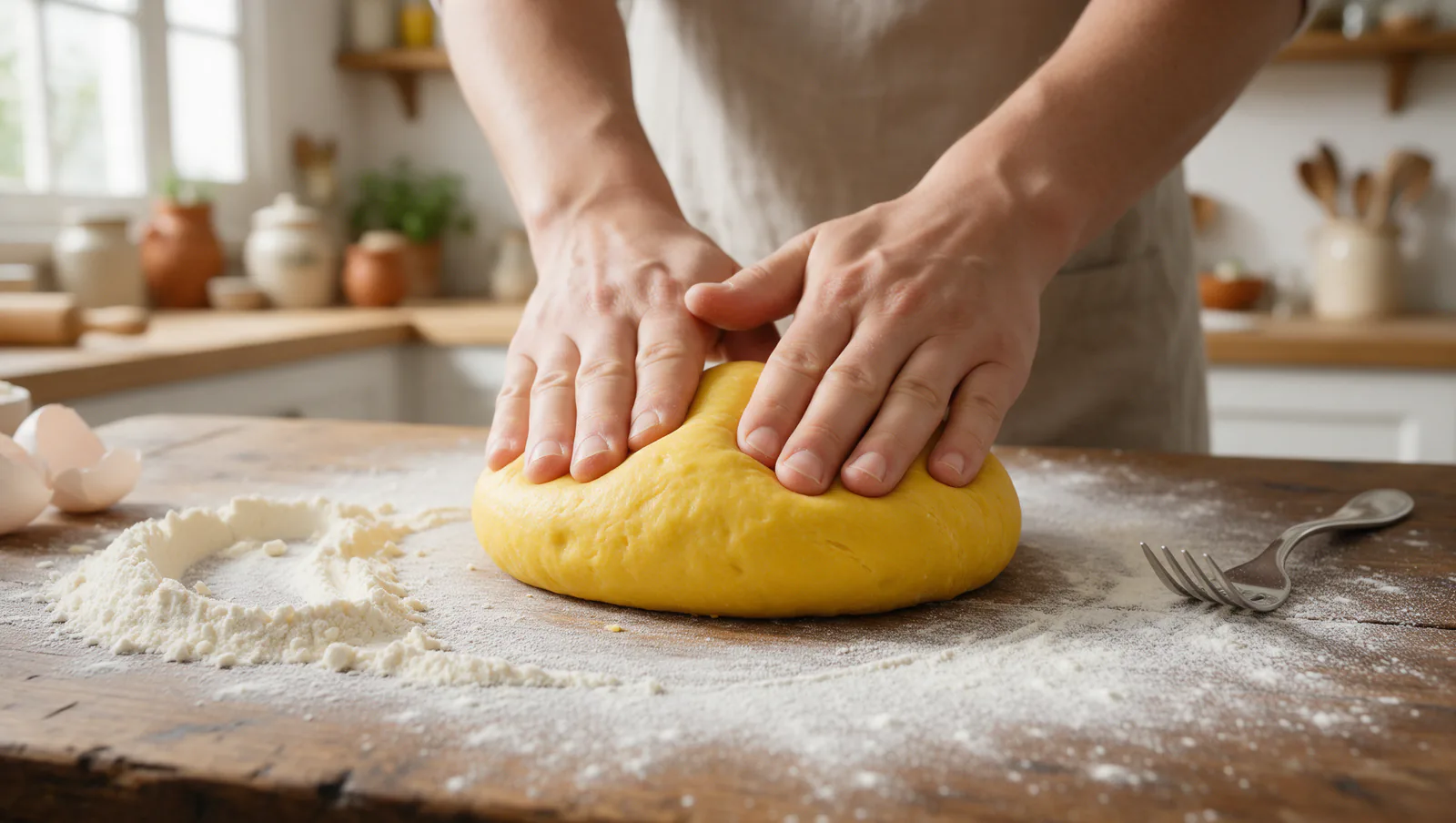
You will pile the flour on the board, make a well in the middle, crack the eggs into it and beat them with a fork, slowly drawing flour in from the sides. When it becomes a shaggy mass, you switch to your hands and knead for about 8 to 10 minutes, until the dough is smooth and springs back slowly when pressed. Then it rests, wrapped, for around 30 minutes, which relaxes the gluten and makes rolling much easier.
A few things that surprise first-timers:
- The dough feels too dry at first. That is normal. It comes together with kneading, and adding water too early makes it sticky.
- The egg well will probably leak at least once. Instructors have seen it a thousand times and will help you rescue it.
- Kneading is a workout. Your forearms may notice.
In southern Italy, and in some classes elsewhere, you may also make an eggless dough of durum wheat semolina and warm water, used for shapes like orecchiette and cavatelli.
Rolling: pin or machine
Many classes have you roll at least one sheet by hand with a long thin rolling pin, in the style of the sfoglina, the traditional pasta maker of Emilia-Romagna. It is harder than it looks: the goal is an even sheet thin enough that you can see the grain of the board, or your hand, through it.
Other classes use a hand-cranked pasta machine, passing the dough through progressively thinner settings. It is faster and more consistent, and it is what most people end up using at home. A good class will show you both, or at least explain why it chose one.
Tip: keep the sheet lightly floured and do not let it dry out while you chat. A sheet that dries too much cracks when you fold or cut it. For filled pasta the sheet needs to stay soft and slightly tacky so the edges seal, while for ribbons a few minutes of drying makes cutting cleaner. Ask your instructor which one you are aiming for before you start.
The shapes you will probably make
What you shape depends on where the class is and how long it runs. Common choices include:
- Tagliatelle and fettuccine: ribbons cut from a rolled sheet, the easiest place to start.
- Pappardelle: wider ribbons, common in Tuscany.
- Ravioli: filled squares or circles, often with ricotta and spinach. Sealing them without air pockets takes practice.
- Tortellini or tortelloni: small folded and twisted filled pasta, a specialty around Bologna and Modena. Fiddly but satisfying.
- Farfalle: pinched bow-tie shapes, popular in family classes.
- Orecchiette and cavatelli: semolina shapes dragged with a knife or fingers, typical of Puglia.
- Pici: thick hand-rolled strands from Tuscany, made from flour and water.
Do not worry if your first ones look uneven. Hand-shaped pasta is supposed to look handmade, and uneven pieces still cook and taste fine.
Cooking, sauces and the meal
Fresh pasta cooks fast, usually in two to four minutes in well-salted boiling water, so the cooking is often done by the instructor while the group sits down. Sauces in a pasta class tend to be simple so the pasta stays the focus: butter and sage for ravioli, a tomato sauce, a ragù that has been simmering since before you arrived, or a light vegetable sauce in season.
Watch the final step closely if you can. Finishing pasta in the pan with a splash of its cooking water, so the sauce clings, is one of the most useful things you can learn, and it applies to dried pasta too.
Wine is often included with the meal, and some classes add a dessert you made during the resting time. Any leftover pasta is usually eaten on the spot rather than taken away, since fresh pasta does not travel well in a hotel room.
How to get the most out of it
- Arrive on time. The dough is made in the first half hour, and catching up is hard.
- Ask about feel, not just quantities. Flour and eggs vary, so knowing what the dough should feel like is more useful than any recipe.
- Take photos of the steps, especially folding techniques for filled pasta. They are easy to forget.
- Mention dietary needs early. Egg-free and gluten-free doughs need different ingredients, so hosts need notice.
- Ask what equipment you really need at home. Usually just a board, a rolling pin or machine, and a knife.
Where to take your first class
You can take a good pasta class almost anywhere, but some places have a particularly strong tradition. Bologna is the home of hand-rolled egg pasta, and our guide to cooking classes in Bologna covers the best options there. For a wider view, see the best pasta-making classes in Italy, or narrow it to pasta-making classes in Rome or pasta-making classes in Florence.
Not traveling yet? There are good classes closer to home, such as these pasta-making classes in NYC, and you can practice from your own kitchen with online pasta-making classes.
Frequently asked questions
Can I take a pasta-making class if I am gluten intolerant or vegan?
Often, yes, but you need to tell the host when you book. Gluten-free pasta uses different flours and needs a clean workspace, and vegan pasta replaces eggs with a semolina and water dough. Not every class can offer these, so confirm before paying.
Will I be able to make pasta at home after one class?
Most people can make a decent egg pasta and simple ribbon shapes at home after one class, especially if they try within a week or two while the feel of the dough is fresh. Filled shapes usually take a few more attempts.
Are pasta classes suitable for children?
Many are, and kids often love the hands-on parts like cracking eggs and shaping farfalle or orecchiette. Check the minimum age and whether wine is served with the meal, and consider a private or family class for younger children.
Can I take my fresh pasta home with me?
Some hosts will pack up extra pasta if you are staying nearby with a kitchen, but most classes expect you to eat it there. Fresh egg pasta should be cooked within a day or dried properly, so it is not practical to carry home on a flight.
- cooking classes
- Fresh Pasta
- pasta
- Beginners